

Waiting for someone’s reply is a normal part of both personal and professional communication. Whether you’re sending an important business email, following up on a job application, or messaging a friend, the words you choose can leave a lasting impression.
While the phrase “I’m waiting for your response” is clear and widely understood, using it repeatedly can make your writing sound repetitive or less engaging.
Learning other ways to say “I’m waiting for your response” helps you communicate more naturally while matching the tone of different situations.
A formal email to a client requires different wording than a casual text to a friend. Choosing the right expression also demonstrates strong communication skills and professionalism. 📧
For example, in a business email, you might write:
- “I look forward to your reply regarding the proposal.”
In a casual conversation, you could simply say:
- “Hit me back when you have a minute!” 😊
You can also read: 19+ Other Ways to Say “I Am Proud of You” (Formal, Informal & Professional Alternatives 2026 Updated)
Although both sentences ask for a response, they create completely different impressions based on tone and context.
By learning other ways to say “I’m waiting for your response”, you’ll improve your vocabulary, avoid repetition, and make your emails, essays, messages, and workplace communication sound more polished and confident.
What Does “I’m Waiting for Your Response” Mean?
Definition:
The phrase “I’m waiting for your response” expresses that the speaker expects or hopes to receive a reply from another person. It politely indicates that further communication is needed before moving forward with a conversation, project, decision, or request.
It is commonly used in emails, letters, text messages, customer support conversations, business communication, and professional correspondence. Understanding other ways to say “I’m waiting for your response” allows you to express the same idea with different levels of politeness, urgency, and professionalism.
Grammar Form:
- Verb phrase
- Present continuous structure
- Subject + “am waiting” + prepositional phrase
- Usually followed by additional information or context
Synonyms:
- Looking forward to your reply
- Awaiting your response
- Waiting for your feedback
- Hoping to hear from you
- Anticipating your reply
Opposites:
- No response needed
- No reply required
- Please disregard this message
- Consider this matter closed
Example Sentences:
- I’m waiting for your response before scheduling the meeting.
- We’re waiting for your response regarding the project proposal.
- I’m waiting for your response so we can finalise the agreement.
- Our team is waiting for your response before moving to the next phase.
These examples show why knowing other ways to say “I’m waiting for your response” can make your writing sound more varied and professional. ✨
When to Use “I’m Waiting for Your Response”
Spoken English:
This phrase works well in everyday conversations when you’re expecting someone to answer a question or make a decision.
- “I’m waiting for your response before booking the tickets.” 😊
Business English:
Frequently used in workplace emails, proposals, client communication, and follow-up messages.
- “I’m waiting for your response regarding the revised contract.”
Emails / Messages:
Useful for politely reminding someone that their reply is important.
- “I’m waiting for your response so we can proceed with the next steps.”
Social Media:
Occasionally used in direct messages or online conversations.
- “Still waiting for your response! 😄”
Academic Writing:
Students and researchers may use similar expressions when communicating with professors or supervisors.
- “I’m waiting for your response concerning my research proposal.”
Professional Meetings:
Suitable when discussing pending approvals or business decisions.
- “We’re waiting for your response before implementing the new policy.”
Using other ways to say “I’m waiting for your response” helps ensure your message sounds appropriate, whether you’re communicating with clients, teachers, colleagues, or friends.
Is “I’m Waiting for Your Response” Polite or Professional?
Tone:
- Neutral to professional
Politeness Level:
- Generally polite and respectful when written professionally.
Formal vs Informal Usage:
- Formal: Common in business emails, customer service, legal communication, and official correspondence.
Example:
“I’m waiting for your response regarding the attached proposal.”
- Informal: Frequently used between friends, classmates, or family members.
Example:
“I’m waiting for your response—don’t leave me hanging! 😄”
Etiquette Tip:
Although the phrase is perfectly acceptable, using other ways to say “I’m waiting for your response” creates more natural communication. In formal emails, alternatives such as “Looking forward to your reply” or “Your prompt response would be appreciated” sound more courteous and polished.
Pros & Cons of Using “I’m Waiting for Your Response”
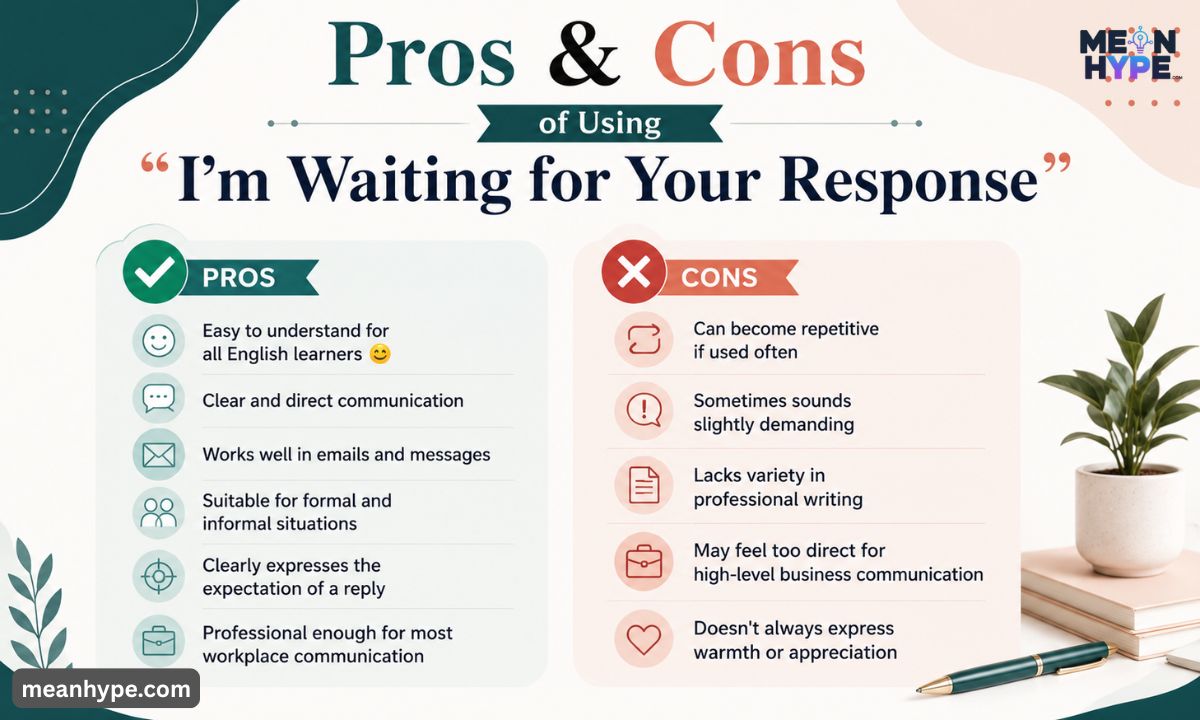
✔ Pros:
- Easy to understand for all English learners 😊
- Clear and direct communication
- Works well in emails and messages
- Suitable for formal and informal situations
- Clearly expresses the expectation of a reply
- Professional enough for most workplace communication
✘ Cons:
- Can become repetitive if used often
- Sometimes sounds slightly demanding
- Lacks variety in professional writing
- May feel too direct for high-level business communication
- Doesn’t always express warmth or appreciation
Learning other ways to say “I’m waiting for your response” helps solve these issues while improving your writing style.
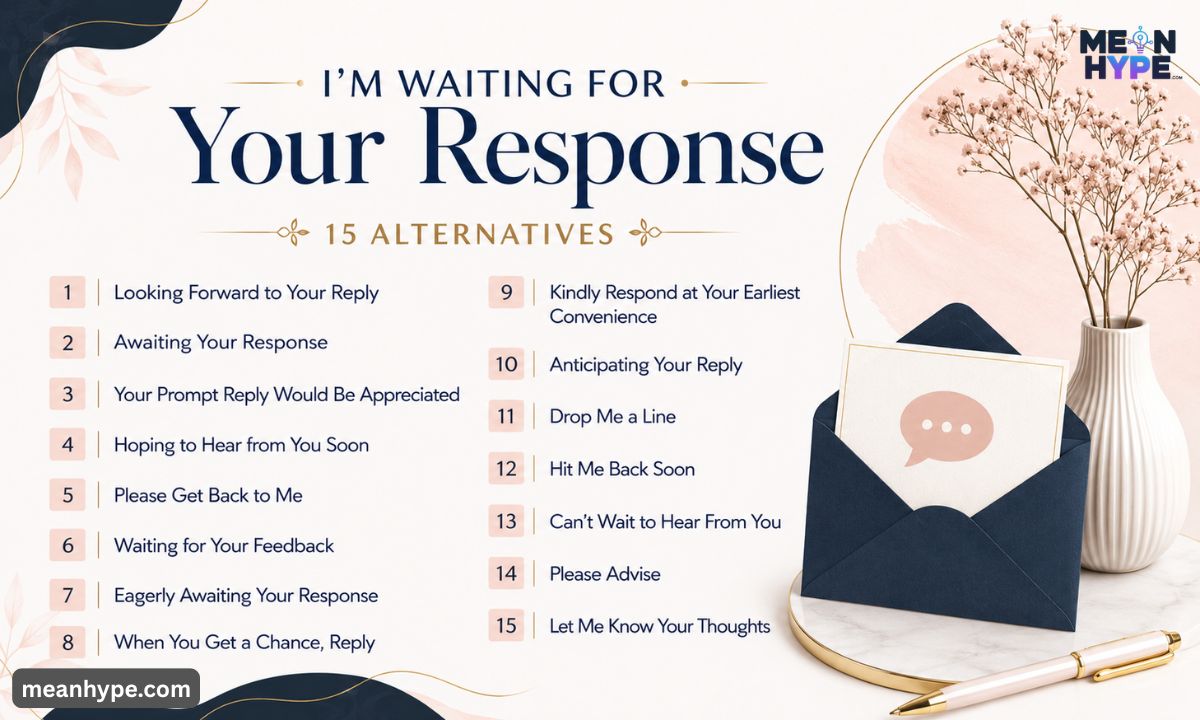
Quick Alternatives List
- Looking Forward to Your Reply
- Awaiting Your Response
- Your Prompt Reply Would Be Appreciated
- Hoping to Hear from You Soon
- Please Get Back to Me
- Waiting for Your Feedback
- Eagerly Awaiting Your Response
- When You Get a Chance, Reply
- Kindly Respond at Your Earliest Convenience
- Anticipating Your Reply
- Drop Me a Line
- Hit Me Back Soon
- Can’t Wait to Hear From You
- Please Advise
- Let Me Know Your Thoughts
Main Body: 15 Alternatives
1. Looking Forward to Your Reply
- Meaning: Expresses that you expect and welcome someone’s response politely.
- Explanation: This is one of the most professional and widely accepted other ways to say “I’m waiting for your response”. It sounds positive rather than demanding and is commonly used in business emails.
- Grammar: Verb phrase
- Example: I look forward to your reply regarding our upcoming meeting.
- Best Use: Business emails, professional communication, client correspondence
- Worst Use: Urgent emergency messages
- Tone: Professional / Polite
- Level: Beginner to Intermediate
- Similarity Score:10/10
- Replaceability Tip: Use this when ending professional emails to sound courteous and confident. 📧
2. Awaiting Your Response
- Meaning: Indicates that you’re waiting for someone to reply.
- Explanation: This alternative sounds more formal and is frequently seen in official emails, legal communication, and corporate correspondence.
- Grammar: Present participle phrase
- Example: We are awaiting your response before proceeding with the agreement.
- Best Use: Formal emails, legal documents, business communication
- Worst Use: Casual texting with friends
- Tone: Formal
- Level: Intermediate
- Similarity Score: 9/10
- Replaceability Tip: Choose this phrase when writing formal workplace emails or official requests. 💼
3. Your Prompt Reply Would Be Appreciated
- Meaning: Politely requests a quick response.
- Explanation: This expression sounds respectful while gently encouraging the recipient to reply soon. It is ideal for professional follow-up emails.
- Grammar: Passive sentence
- Example: our prompt reply would be appreciated so we can finalise the schedule.
- Best Use: Business communication, customer service, workplace emails
- Worst Use: Casual social conversations
- Tone: Formal / Respectful
- Level: Intermediate
- Similarity Score:9/10
- Replaceability Tip: Use when requesting timely replies without sounding pushy. 😊
4. Hoping to Hear from You Soon
- Meaning: Expresses hope that someone will reply shortly.
- Explanation: This phrase feels warm, friendly, and encouraging. It is one of the most natural other ways to say “I’m waiting for your response” in both personal and semi-professional communication.
- Grammar: Verb phrase
- Example: I’m hoping to hear from you soon regarding the interview.
- Best Use: Emails, networking, follow-up messages
- Worst Use: Highly formal legal correspondence
- Tone: Friendly / Professional
- Level: Beginner
- Similarity Score:9/10
- Replaceability Tip: Perfect when you want to sound approachable while requesting a response. 🌟
5. Please Get Back to Me
- Meaning: Politely asks someone to reply.
- Explanation: A simple and versatile expression that works well in both professional and everyday conversations.
- Grammar: Imperative sentence
- Example: Please get back to me when you’ve reviewed the proposal.
- Best Use: Emails, phone messages, workplace communication
- Worst Use: Highly formal legal writing
- Tone: Neutral / Friendly
- Level: Beginner
- Similarity Score: 8/10
- Replaceability Tip: Excellent for everyday business communication because it sounds polite without being overly formal.
6. Waiting for Your Feedback
- Meaning: Indicates you’re expecting comments, suggestions, or opinions.
- Explanation: Instead of asking for a simple reply, this phrase specifically requests feedback or evaluation. It’s especially common in project discussions and workplace communication.
- Grammar: Verb phrase
- Example: We’re waiting for your feedback before publishing the final version.
- Best Use: Professional reviews, academic discussions, and project collaboration
- Worst Use: Casual social chats
- Tone: Professional / Neutral
- Level: Intermediate
- Similarity Score: 8/10
- Replaceability Tip: Use when you need opinions or detailed comments instead of a simple reply. 📚
7. Eagerly Awaiting Your Response
- Meaning: Showing strong interest and expectation for a reply.
- Explanation: This phrase adds emotional emphasis while remaining professional in many contexts.
- Grammar Note: Adverb + verb phrase
- Example Sentence: I am eagerly awaiting your response regarding the job application result.
- Best Use: Job applications, formal requests, important updates
- Worst Use: Very casual chats
- Tone: Formal / Enthusiastic 😊
- Level: Intermediate
- Similarity Score: 9/10
- Replaceability Tip: Use when you want to sound polite but urgent.
8. When You Get a Chance, Reply
- Meaning: Asking for a response without pressure.
- Explanation: A relaxed and friendly way to request a reply.
- Grammar Note: Conditional phrase
- Example Sentence: When you get a chance, reply to my message.
- Best Use: Casual conversations, friendly emails
- Worst Use: Corporate or urgent communication
- Tone: Informal / Friendly
- Level: Beginner
- Similarity Score: 7/10
- Replaceability Tip: Best when you do not want to sound demanding 👍
9. Kindly Respond at Your Earliest Convenience
- Meaning: A polite request for a timely response.
- Explanation: A very formal and respectful expression often used in business writing.
- Grammar Note: Polite imperative phrase
- Example Sentence: Kindly respond at your earliest convenience so we can proceed.
- Best Use: Corporate emails, official communication
- Worst Use: Casual texting
- Tone: Formal / Polite
- Level: Advanced
- Similarity Score: 9/10
- Replaceability Tip: Ideal for professional and respectful communication 🏢
10. Anticipating Your Reply
- Meaning: Expecting a response in a formal tone.
- Explanation: A polished expression often used in business emails.
- Grammar Note: Verb phrase
- Example Sentence: I am anticipating your reply regarding the contract details.
- Best Use: Formal emails, business discussions
- Worst Use: Informal chats
- Tone: Formal
- Level: Advanced
- Similarity Score: 8/10
- Replaceability Tip: Best for structured professional communication 📩
11. Drop Me a Line
- Meaning: Asking someone to send a message.Explanation: Casual and friendly expressions are often used in informal writing.
- Grammar Note: Idiomatic phrase
- Example Sentence: Drop me a line when you’re free.
- Best Use: Friends, social conversations
- Worst Use: Formal or business emails
- Tone: Casual
- Level: Beginner
Similarity Score: 7/10 - Replaceability Tip: Use only in informal communication 💬
12. Hit Me Back Soon
- Meaning: Asking for a quick, informal reply.
- Explanation: Modern slang is used mostly in texting or on social media.
- Grammar Note: Phrasal verb
- Example Sentence: Hit me back soon with the details.
- Best Use: Friends, chats, social media
- Worst Use: Professional communication
- Tone: Very Informal
- Level: Beginner
- Similarity Score: 7/10
- Replaceability Tip: Avoid in formal writing 📱
13. Can’t Wait to Hear From You
- Meaning: Expressing excitement for a response.
- Explanation: Warm and friendly phrase often used in informal communication
- Grammar Note: Idiomatic expression
- Example Sentence: Can’t wait to hear from you about your travel plans.
- Best Use: Friendly emails, personal messages
- Worst Use: Strict business communication
- Tone: Friendly / Emotional 😊
- Level: Beginner
- Similarity Score: 8/10
- Replaceability Tip: Great for personal or warm communication
14. Please Advise
- Meaning: Requesting guidance or response.
- Explanation: A very formal phrase commonly used in professional emails.
- Grammar Note: Imperative phrase
- Example Sentence: Please advise on the next steps regarding this issue.
- Best Use: Corporate emails, official communication
- Worst Use: Casual chatting
- Tone: Formal / Professional
- Level: Advanced
- Similarity Score: 9/10
- Replaceability Tip: Best for formal decision-based communication 📊
15. Let Me Know Your Thoughts
- Meaning: Asking for opinion or feedback.
- Explanation: Neutral and commonly used collaborative phrase.
- Grammar Note: Imperative phrase
- Example Sentence: Let me know your thoughts on the proposal.
- Best Use: Teamwork, emails, discussions
- Worst Use: Strict formal documents
- Tone: Neutral / Friendly
- Level: Beginner
- Similarity Score: 8/10
- Replaceability Tip: Ideal for teamwork and brainstorming 💡
Mini Dialogue Examples for other ways to say “I’m waiting for your response”
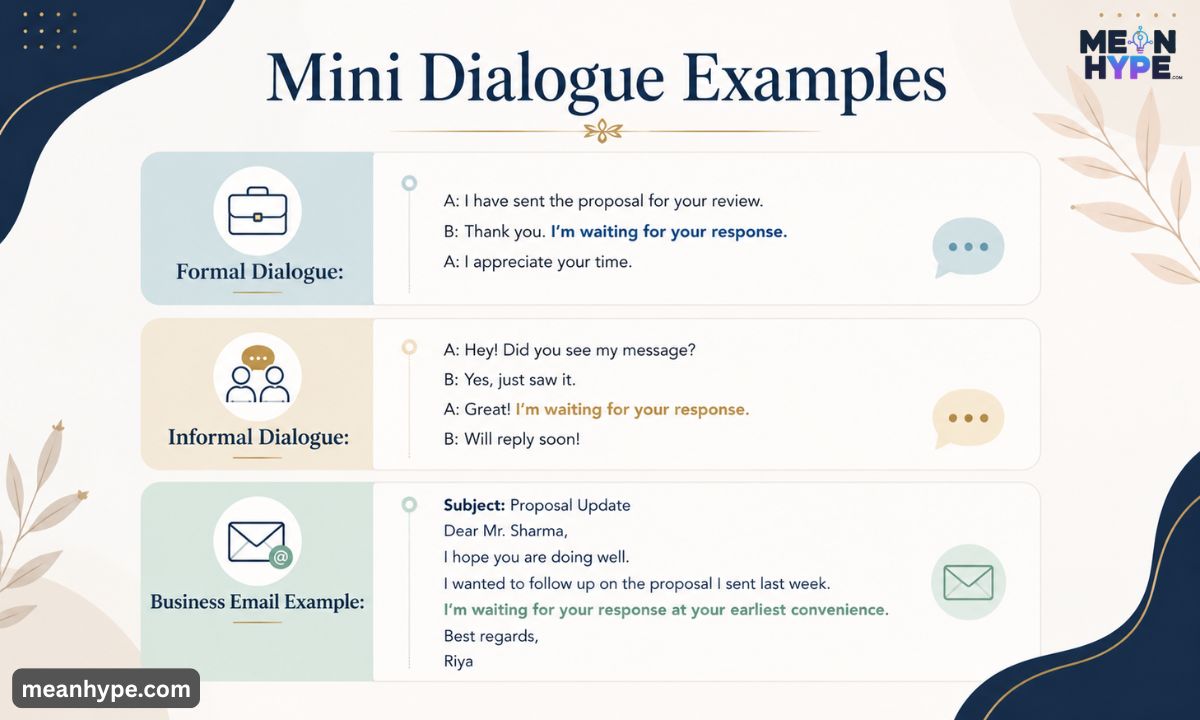
Mini dialogues show how different alternatives to “I’m waiting for your response” are used in real-life communication. These examples help you understand tone differences between formal, informal, and business contexts so you can apply them naturally in your own conversations 😊
Formal Dialogue:
- A: “We have submitted the revised proposal.”
B: “Thank you. I am awaiting your response before final approval.” - A: “The report has been shared for review.”
B: “Kindly respond at your earliest convenience.”
Informal Dialogue:
- A: “Did you check my message?”
B: “Yeah, I’ll get back to you soon 👍” - A: “What do you think about this idea?”
B: “Let me know your thoughts when you’re free.”
Business Email Example:
- Subject: Follow-up on Project Proposal
Dear Sir,
I hope you are doing well. I have shared the updated proposal for your review. I look forward to your reply regarding the final approval so we can proceed with the next phase.
Kindly advise if any further changes are required.
Best regards,
Sarah
Mistakes to Avoid in other ways to say “I’m waiting for your response”
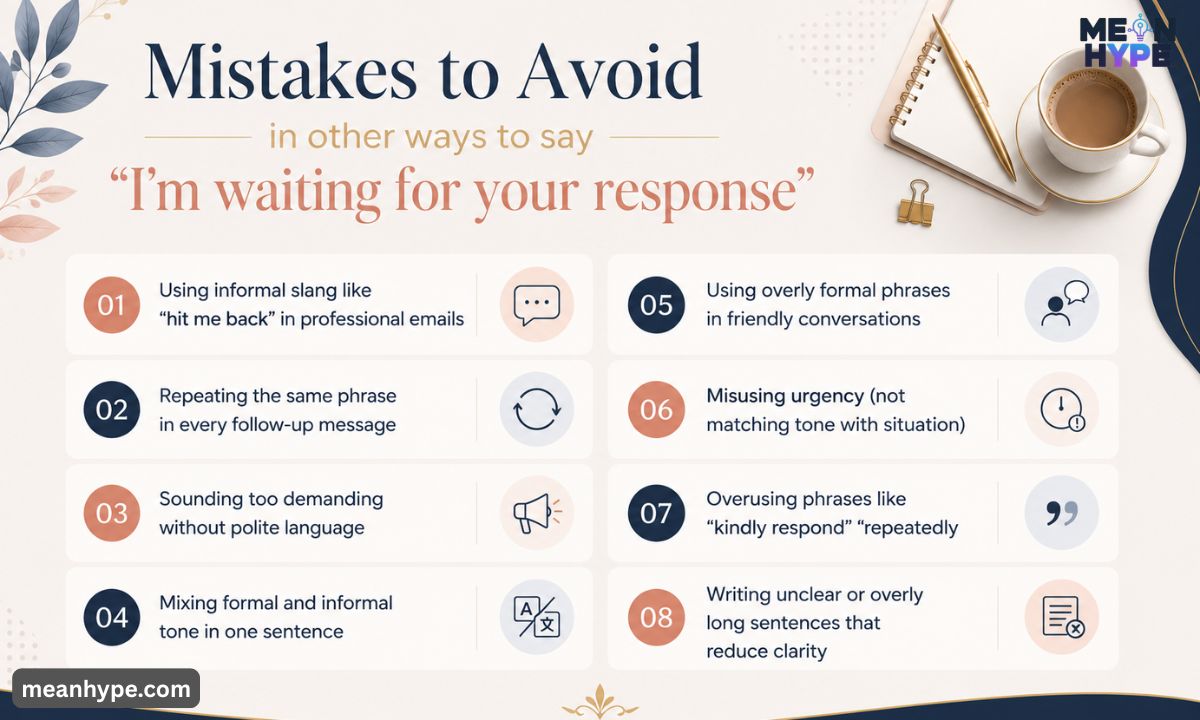
- Using informal slang like “hit me back” in professional emails
- Repeating the same phrase in every follow-up message
- Sounding too demanding without polite language
- Mixing formal and informal tone in one sentence
- Using overly formal phrases in friendly conversations
- Misusing urgency (not matching tone with situation)
- Overusing phrases like “kindly respond” repeatedly
- Writing unclear or overly long sentences that reduce clarity
Cultural & Tone Tips
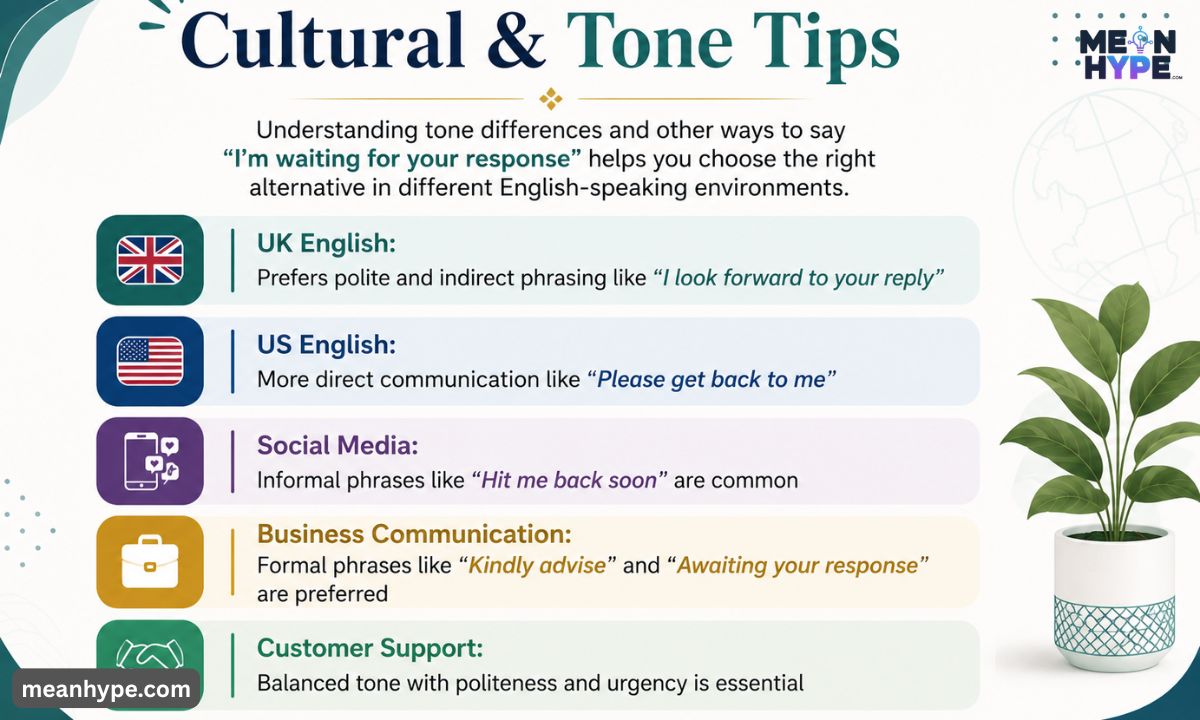
Understanding tone differences and other ways to say “I’m waiting for your response” helps you choose the right alternative in different English-speaking environments.
- 🇬🇧 UK English: Prefers polite and indirect phrasing like “I look forward to your reply”
- 🇺🇸 US English: More direct communication like “Please get back to me”
- 📱 Social Media: Informal phrases like “Hit me back soon” are common
- 💼 Business Communication: Formal phrases like “Kindly advise” and “Awaiting your response” are preferred
- 🤝 Customer Support: Balanced tone with politeness and urgency is essential
Comparison Table
| Phrase | Tone | Best Context | Professional Level | Example |
| Eagerly awaiting your response | Formal | Job/Business | High | I am eagerly awaiting your response |
| Kindly respond at your earliest convenience | Formal | Corporate | High | Kindly respond at your earliest convenience |
| Please advise | Formal | Office | High | Please advise on next steps |
| Let me know your thoughts | Neutral | Teamwork | Medium | Let me know your thoughts |
| Hit me back soon | Informal | Chat | Low | Hit me back soon |
FAQs
Is “I’m waiting for your response” polite?
Yes, it is polite, but it can sound slightly direct in formal communication.
What is the most professional alternative for other ways to say “I’m waiting for your response”?
“Kindly respond at your earliest convenience” or “Awaiting your response.”
What is the most friendly alternative?
“Let me know your thoughts”, or “Drop me a line.”
Can I use slang in emails?
No, avoid informal phrases like “hit me back” in professional writing.
Which phrase is best for follow-ups?
“I look forward to your reply” works best for polite follow-ups.
Conclusion
Using alternatives to “I’m waiting for your response” improves your communication skills and helps you sound more professional, polite, and adaptable. Whether you are writing emails, chatting with friends, or handling business communication, choosing the right phrase ensures clarity and a positive tone.
By practising these expressions regularly, you can make your English more natural, confident, and effective across all contexts 🚀. Mastering other ways to say “I’m waiting for your response” allows you to express yourself more clearly in both formal and informal situations.

Ston is the founder and author of MeanHype, a website dedicated to explaining meanings, definitions, slang terms, phrases, abbreviations, and modern internet language in a simple and easy-to-understand way. With a passion for language and digital culture, Ston creates helpful content that makes complex or trending terms clear for readers around the world.