

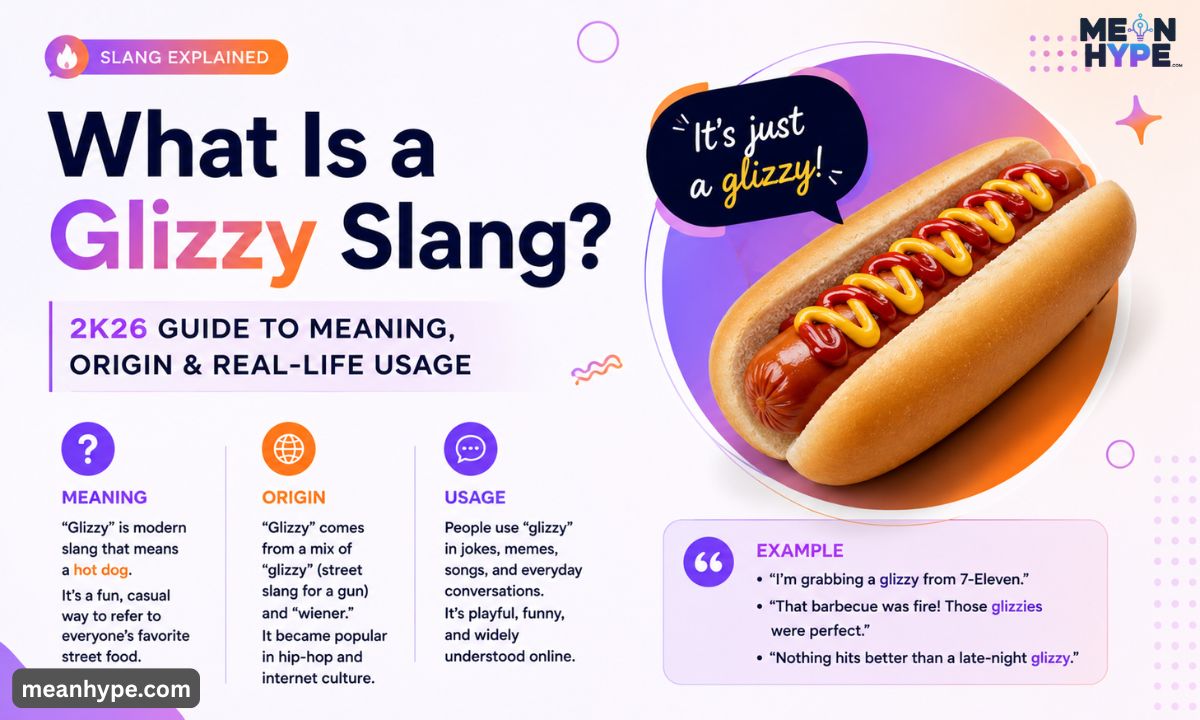
Language is always changing, and glizzy slang is one of the biggest reasons why everyday conversations feel fresh and exciting.
One word that has become incredibly popular over the last few years is glizzy slang. 🌭📱
If you’ve ever watched a TikTok video, browsed memes on X (formerly Twitter), or joined a Discord server, there’s a good chance you’ve come across the word “glizzy.”
At first glance, glizzy slang may sound confusing, but once you understand the context, it becomes much easier to recognize why millions of people use it.
You can also read: 25+ Other Ways to Say “I’m Waiting for Your Response” (Formal, Informal & Professional Alternatives 2026 updated)
Unlike traditional dictionary words, internet slang, Gen Z vocabulary, viral expressions, and online language trends evolve rapidly. A single meme or viral video can introduce a completely new word that spreads across the internet within days.
Today, platforms like TikTok, Instagram, Snapchat, Discord, YouTube Shorts, and gaming communities influence how young people communicate
This guide explains everything you need to know about glizzy slang, including its meaning, origin, usage, examples, and related expressions used by today’s internet generation.
Quick Reference Table
| Slang Term | Meaning | Tone | Popular Among | Where It’s Used |
| Glizzy | Hot dog (sometimes gun in older slang) | Funny | Gen Z | Online & Offline |
| Glizzy Gobbler | A person who loves eating hot dogs | Playful | Gen Z | Mostly Online |
| Bussin | Extremely delicious or amazing | Positive | Gen Z | Both |
| Cap | A lie or false statement | Casual | Gen Z | Both |
| No Cap | Truthfully or seriously | Friendly | Gen Z | Both |
| Drip | Stylish clothing | Positive | Gen Z & Millennials | Both |
| Bet | Agreement or acceptance | Casual | Gen Z | Both |
| Mid | Average quality | Neutral | Gen Z | Mostly Online |
| Fire | Excellent or impressive | Positive | Everyone | Both |
| Snack | Attractive person | Playful | Millennials & Gen Z | Online |
| Low-key | Quietly or secretly | Casual | Millennials | Both |
| High-key | Openly or strongly | Casual | Gen Z | Online |
| Vibe | Feeling or atmosphere | Relaxed | All Ages | Both |
| Sus | Suspicious | Casual | Gen Z | Both |
| Flex | Show off | Confident | Gen Z | Both |
| Lit | Very exciting | Positive | Millennials | Both |
| W | Win or success | Positive | Gen Z | Online |
| L | Failure or loss | Negative | Gen Z | Online |
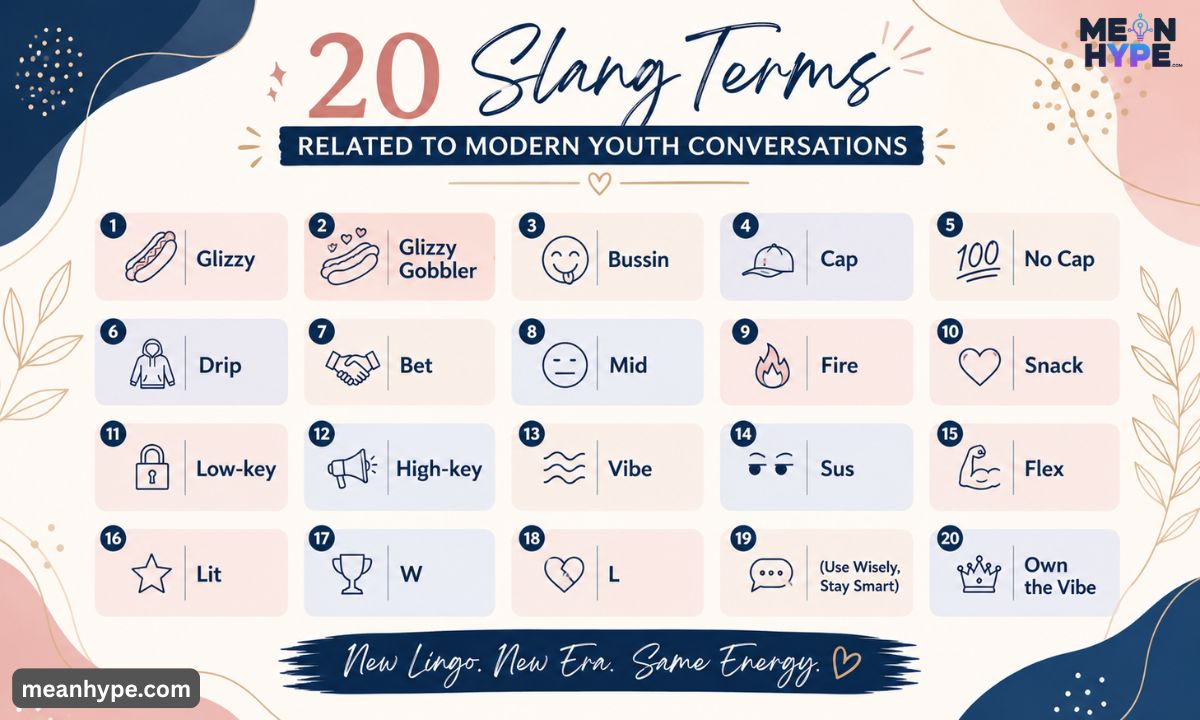
20 Slang Terms Related to Modern Youth Conversations
1. Glizzy 🌭
- Meaning: In today’s internet culture, glizzy slang most commonly refers to a hot dog.
- Explanation: The popularity of TikTok memes, viral food jokes, and gaming communities helped this meaning spread worldwide.
- When to Use It: Use glizzy slang while joking with friends, sharing memes, discussing food, or posting funny social media content.
- When NOT to Use It: Avoid using glizzy slang during business meetings, academic writing, interviews, or professional emails where slang is inappropriate.
- Example Conversation:
Friend 1: “You already finished two glizzies?” 🌭
Friend 2: “I’m still hungry. Bring me another one!” - Trending Status: ✅ Still Trending
2. Glizzy Gobbler 😂
- Meaning: A humorous nickname for someone who eats lots of hot dogs.
- Explanation: This phrase became popular through internet memes, TikTok challenges, and funny reaction videos. It isn’t meant to insult someone but is usually used as playful teasing among friends.
- When to Use It: Funny conversations, food challenges, meme pages, or casual group chats.
- When NOT to Use It: Avoid using it with strangers or anyone who may misunderstand the joke.
- Example Conversation:
Friend 1: “That’s your fourth hot dog today!”
Friend 2: “Looks like I’m the glizzy gobbler of the group.” 😂 - Trending Status: ✅ Trending
3. Bussin 😋
- Meaning: Something that tastes incredibly delicious or is extremely impressive.
- Explanation: One of the most popular Gen Z slang words, bussin, usually describes amazing food but can also refer to anything exceptionally good.
- When to Use It: Talking about meals, desserts, restaurants, or enjoyable experiences.
- When NOT to Use It: Professional food reviews or formal writing.
- Example Conversation:
“This burger is bussin!” 🍔
“I know! Best meal I’ve had all week.” - Trending Status: ✅ Very Popular
4. Cap 🧢
- Meaning: A lie or false statement.
- Explanation: If someone exaggerates or says something unbelievable, people often reply with “That’s cap.” It’s among the most frequently used internet slang words today.
- When to Use It: Friendly conversations, gaming chats, memes, and social media.
- When NOT to Use It: Serious discussions or workplace communication.
- Example Conversation:
“I scored 100 goals yesterday.” - “That’s cap.” 🧢
- Trending Status: ✅ Still Popular
5. No Cap 💯
- Meaning: “I’m telling the truth.”
- Explanation: This expression emphasizes honesty and sincerity. It often appears alongside stories, opinions, or recommendations.
- When to Use It: Casual conversations, TikTok comments, gaming chats, or text messages.
- When NOT to Use It: Essays, business reports, or academic writing.
- Example Conversation:
“This pizza is the best in town, no cap.” 🍕 - “I’ve got to try it now!”
- Trending Status: ✅ Trending
6. Drip 👟
- Meaning: Stylish clothes or impressive fashion.
- Explanation: Among fashion slang, streetwear vocabulary, and social media expressions, “drip” compliments someone’s appearance or outfit.
- When to Use It: Fashion discussions, Instagram posts, outfit photos, or compliments.
- When NOT to Use It: Formal clothing reviews or professional business communication.
- Example Conversation:
“Your sneakers have serious drip!” 👟 - “Thanks! Just bought them yesterday.”
- Trending Status: ✅ Popular
7. Bet 👍
- Meaning: A casual way of saying “Okay,” “Sure,” or “I agree.”
- Explanation: Instead of replying with “yes,” many young people simply say “bet.” It’s quick, friendly, and widely used in text messaging slang.
- When to Use It: Making plans, accepting invitations, confirming arrangements, or agreeing with friends.
- When NOT to Use It: Professional emails, interviews, or formal workplace communication.
- Example Conversation:
Friend 1: “Movie tonight at 8?” 🎬 - Friend 2: “Bet!”
- Trending Status: ✅ Frequently Used
8. Mid 😐
- Meaning: “Mid” is used to describe something average, ordinary, or less impressive than expected.
- Explanation: In modern internet slang, Gen Z vocabulary, and social media language, “mid” is commonly used to review movies, games, food, music, fashion, or even sports performances.
- When to Use It: Use it when giving casual opinions about entertainment, food, products, or experiences that feel average.
- When NOT to Use It: Avoid using it in professional reviews, academic discussions, or when giving formal feedback.
- Example:
Friend 1: “How was the movie?” 🎬
Friend 2: “Honestly, it was kind of mid.” - Trending? ✅ Yes
9. Fire 🔥
- Meaning: “Fire” means something is outstanding, exciting, impressive, or extremely good.
- Explanation: Whether someone is talking about music, fashion, food, art, or even a social media post, calling it “fire” is one of the highest compliments in modern slang.
- When to Use It: Complimenting songs, clothing, meals, designs, performances, or creative work.
- When NOT to Use It: Formal reports, technical documents, or business presentations.
- Example:
Friend 1: “Did you hear that new album?” 🎵
Friend 2: “Yeah, every track is fire!” - Trending? ✅ Yes
10. Snack 😍
- Meaning: A playful slang word used to describe someone who looks very attractive or stylish.
- Explanation: Instead of saying someone is handsome or beautiful, younger generations often jokingly call them a “snack.” The phrase is mostly seen on Instagram, TikTok, and other social platforms.
- When to Use It: Giving playful compliments among friends or in light-hearted conversations.
- When NOT to Use It: In professional environments or in conversations with people you don’t know well.
- Example:
Friend 1: “Did you see Emma’s new photo?” 📸
Friend 2: “She looks like a whole snack!” - Trending? 📉 Slightly Declining
11. Low-key 🤫
- Meaning: “Low-key” means secretly, quietly, or to a small extent.
- Explanation: People use this expression when they don’t want to sound too emotional or dramatic. It’s common in casual conversations and social media posts.
- When to Use It: Sharing hidden opinions or small personal feelings.
- When NOT to Use It: Business communication or academic writing.
- Example:
Friend 1: “Do you want another burger?” 🍔
Friend 2: “Low-key… yes.” - Trending? ✅ Yes
12. High-key 😄
- Meaning: The opposite of “low-key.” It means openly, strongly, or obviously.
- Explanation: Instead of hiding feelings, people use “high-key” to emphasize them.
- When to Use It: Expressing excitement, happiness, or strong opinions.
- When NOT to Use It: Formal writing or professional communication.
- Example:
Friend 1: “How was the concert?” 🎤
Friend 2: “High-key the best concert I’ve ever attended.” - Trending? ✅ Yes
13. Vibe ✨
- Meaning: The overall feeling, atmosphere, or mood of a person, place, or event.
- Explanation: One of the most common social media slang expressions, “vibe,” can describe almost anything—from cafés and vacations to music and personalities.
- When to Use It: Talking about moods, environments, aesthetics, or experiences.
- When NOT to Use It: Technical reports or legal documents.
- Example:
Friend 1: “How do you like this coffee shop?” ☕
Friend 2: “I love the vibe here.” - Trending? ✅ Very Popular
14. Sus 👀
- Meaning: Short for “suspicious.”
- Explanation: The word became extremely popular after the success of the online game Among Us, but it is now used everywhere whenever something seems unusual or dishonest.
- When to Use It: Friendly jokes, gaming chats, memes, and casual conversations.
- When NOT to Use It: Serious accusations or professional communication.
- Example:
Friend 1: “He suddenly deleted all his messages.” 📱
Friend 2: “That’s pretty sus.” - Trending? ✅ Yes
15. Flex 💪
- Meaning: To show off achievements, money, possessions, or success.
- Explanation: People often use this word jokingly when someone proudly displays something expensive or impressive.
- When to Use It: Friendly teasing or discussing achievements.
- When NOT to Use It: Professional conversations.
- Example:
Friend 1: “You bought another gaming PC?” 🎮
Friend 2: “Stop flexing already!” - Trending? ✅ Yes
16. Lit 🎉
- Meaning: Something extremely exciting, energetic, or fun.
- Explanation: Although not as popular as before, “lit” still appears in conversations about parties, concerts, vacations, and celebrations.
- When to Use It: Describing exciting experiences.
- When NOT to Use It: Formal presentations or reports.
- Example:
Friend 1: “How was the festival?” 🎊
Friend 2: “It was absolutely lit!” - Trending? 📉 Declining
17. W 🏆
- Meaning: A symbol for a win, victory, or success.
- Explanation: Instead of saying “great job,” many people simply comment “W.” It’s extremely common in gaming communities, sports discussions, and social media comments.
- When to Use It: Celebrating achievements or congratulating someone.
- When NOT to Use It: Professional communication.
- Example:
Friend 1: “I finally passed my driving test!” 🚗
Friend 2: “Huge W!” - Trending? ✅ Yes
18. L 😅
- Meaning: A loss, failure, disappointment, or embarrassing moment.
- Explanation: “L” is the opposite of “W.” It is commonly used humorously when something goes wrong.
- When to Use It: Light-hearted conversations or memes.
- When NOT to Use It: Sensitive situations where someone genuinely feels upset.
- Example:
Friend 1: “I forgot my wallet again.” 😅
Friend 2: “That’s a big L.” - Trending? ✅ Yes
19. Fierce 💥
- Meaning: Someone who is bold, fearless, confident, or powerful.
- Explanation: Although the word existed before modern internet slang, it’s still commonly used to praise confidence, determination, and strong personalities.
- When to Use It: Complimenting confidence or determination.
- When NOT to Use It: Very casual jokes that may sound too dramatic.
- Example:
Friend 1: “She handled the debate perfectly.” 🎤
Friend 2: “That was fierce.” - Trending? 📉 Slowly Declining
20. Slaps 🎶
- Meaning: Used to describe music, food, or entertainment that’s exceptionally enjoyable.
- Explanation: If a song or meal is so good that you instantly love it, many people simply say it “slaps.”
- When to Use It: Discussing songs, playlists, restaurants, or entertainment.
- When NOT to Use It: Professional reviews or academic writing.
- Example:
Friend 1: “Have you heard this new song?” 🎧
Friend 2: “Yeah, it absolutely slaps!” - Trending? ✅ Yes
Generational Slang Comparison 👥
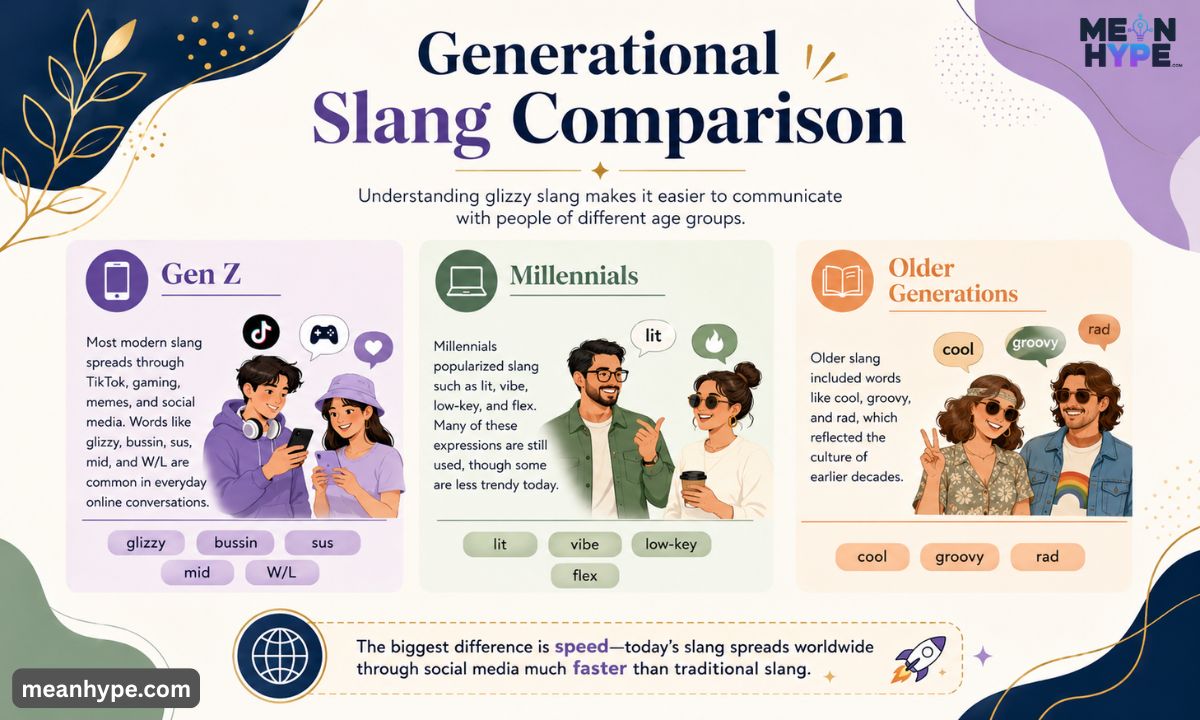
Understanding glizzy slang makes it easier to communicate with people of different age groups.
Gen Z 📱
Most modern slang spreads through TikTok, gaming, memes, and social media. Words like glizzy, bussin, sus, mid, and W/L are common in everyday online conversations.
Millennials 💻
Millennials popularized slang such as lit, vibe, low-key, and flex. Many of these expressions are still used, though some are less trendy today.
Older Generations 📚
Older slang included words like cool, groovy, and rad, which reflected the culture of earlier decades.
The biggest difference is speed—today’s slang spreads worldwide through social media much faster than traditional slang. 🚀
How to Use Slang Naturally Without Sounding Awkward 😊
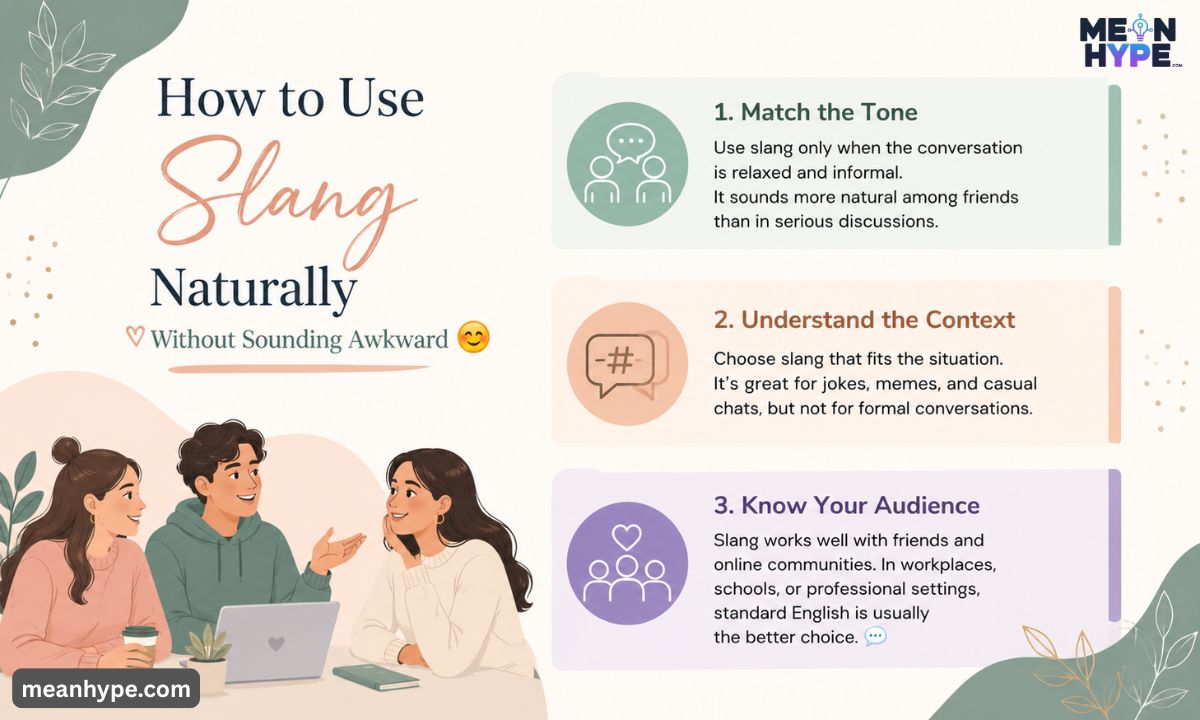
- Match the Tone
Use glizzy slang only when the conversation is relaxed and informal. It sounds more natural among friends than in serious discussions. - Understand the Context
Choose slang that fits the situation. It’s great for jokes, memes, and casual chats, but not for formal conversations. - Know Your Audience
Glizzy slang works well with friends and online communities. In workplaces, schools, or professional settings, standard English is usually the better choice. 💬
Common Slang Mistakes ❌
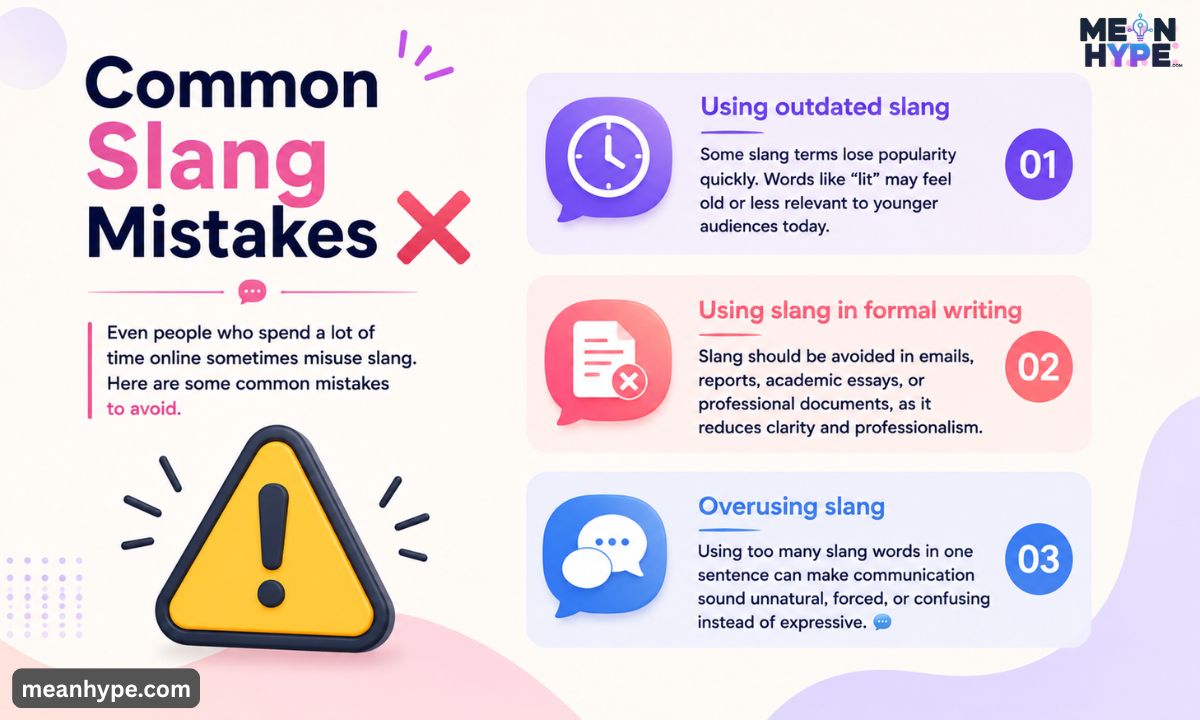
Even people who spend a lot of time online sometimes misuse glizzy slang. Here are some common mistakes to avoid.
- Using outdated slang
Some slang terms lose popularity quickly. Words like “lit” may feel old or less relevant to younger audiences today. - Using slang in formal writing
Such as “Glizzy slang should be avoided in emails, reports, academic essays, or professional documents, as it reduces clarity and professionalism. - Overusing slang
Using too much glizzy slang in one sentence can make communication sound unnatural, forced, or confusing instead of expressive. 💬
Practice Section ✍️
Fill in the Blanks
Choose the correct slang word.
- This pizza is __________. (bussin / cap)
- That story sounds like __________.
- Your outfit has serious __________.
- Missing the train was a huge __________.
- This playlist really __________.
- That explanation seems __________.
- Free movie tickets? Big __________.
- The game was __________, not amazing but not terrible.
- I honestly want another hot dog, __________.
- I’m serious, __________.
Choose the Correct Answer
1. Which slang word means “average”?
A) Fire
B) Mid
C) Drip
✅ Answer: B
2. Which slang means “a lie”?
A) Cap
B) Bet
C) Vibe
✅ Answer: A
3. Which word describes stylish clothing?
A) Sus
B) Mid
C) Drip
✅ Answer: C
4. Which slang means suspicious?
A) Bussin
B) Sus
C) Snack
✅ Answer: B
5. Which slang represents success?
A) L
B) Mid
C) W
✅ Answer: C
Rewrite Using Slang
Rewrite these sentences using modern slang.
- This burger tastes amazing.
- Your clothes look very stylish.
- That idea seems suspicious.
- We won the competition.
- That movie was only average.
FAQs ❓
What does glizzy mean in modern slang?
Today, glizzy slang most commonly refers to a hot dog, especially in memes, TikTok videos, and humorous online conversations. 🌭
Why is a hot dog called a glizzy?
The nickname became popular after internet creators and meme communities began using the word humorously in videos featuring hot dogs. The joke spread quickly across social media.
Is Glizzy still popular in 2026?
Yes. Glizzy slang is still widely recognized on TikTok, Discord, YouTube, Instagram, and other social platforms.
Can glizzy have another meaning?
Historically, yes. In some regional communities, the glizzy slang had a different meaning before internet culture changed how most people use it.
Should I use glizzy in school or business emails?
No. Like most slang expressions, glizzy slang is best reserved for casual conversations, memes, social media, gaming chats, or friendly text messages.
Why does slang become popular so quickly?
Social media platforms allow millions of users to share memes, videos, and jokes instantly. As a result, new words can spread across the world within days.
Will today’s slang still be popular in the future?
Some expressions disappear quickly, while others become permanent parts of everyday language. Only time determines which slang survives.
Conclusion 🎯
Language never stays the same, and that’s exactly what makes slang so interesting. Every year, new expressions appear through social media, gaming communities, music, viral videos, and internet memes, giving people fresh ways to communicate and express themselves.
One of the best examples is glizzy slang, which evolved from a regional expression into a worldwide internet joke about hot dogs.
Glizzy slang popularity shows how quickly online communities can reshape the meaning of a word and turn it into part of everyday conversation. 🌭😂
Understanding internet slang, Gen Z vocabulary, online expressions, and viral language trends doesn’t mean you need to use them all the time. Instead, glizzy slang helps you recognize conversations, understand memes, and communicate naturally with friends when the situation is appropriate.
Ston is the founder and author of MeanHype, a website dedicated to explaining meanings, definitions, slang terms, phrases, abbreviations, and modern internet language in a simple and easy-to-understand way. With a passion for language and digital culture, Ston creates helpful content that makes complex or trending terms clear for readers around the world.