

Have you ever thanked someone in a text, and they simply replied with “YW”? If you stopped for a moment and wondered what it meant, you’re not alone. Every day, thousands of people search for YW mean after thank you because this short abbreviation appears in text messages, social media, online chats, and messaging apps.
Modern communication is full of texting abbreviations that make conversations faster. While some slang terms can have several meanings, YW is one of the easiest to understand once you know the context.
In most situations, YW is simply a polite reply that means “You’re Welcome.” Instead of typing two complete words, people use these two letters to save time while keeping the conversation friendly.
Whether you’re chatting on WhatsApp, Instagram, Snapchat, Facebook Messenger, Discord, or even through SMS, understanding YW mean after thank you helps you reply naturally and avoid confusion.
In this complete guide, you’ll learn the exact YW mean after thank you, why people use it, where it’s commonly used, real conversation examples, proper usage, alternatives, and answers to the most frequently asked questions.
You can also read: What does VM mean in Text ? Simple Guide with Examples (2026)
Quick Answer
If you’re looking for the fastest answer, here it is.
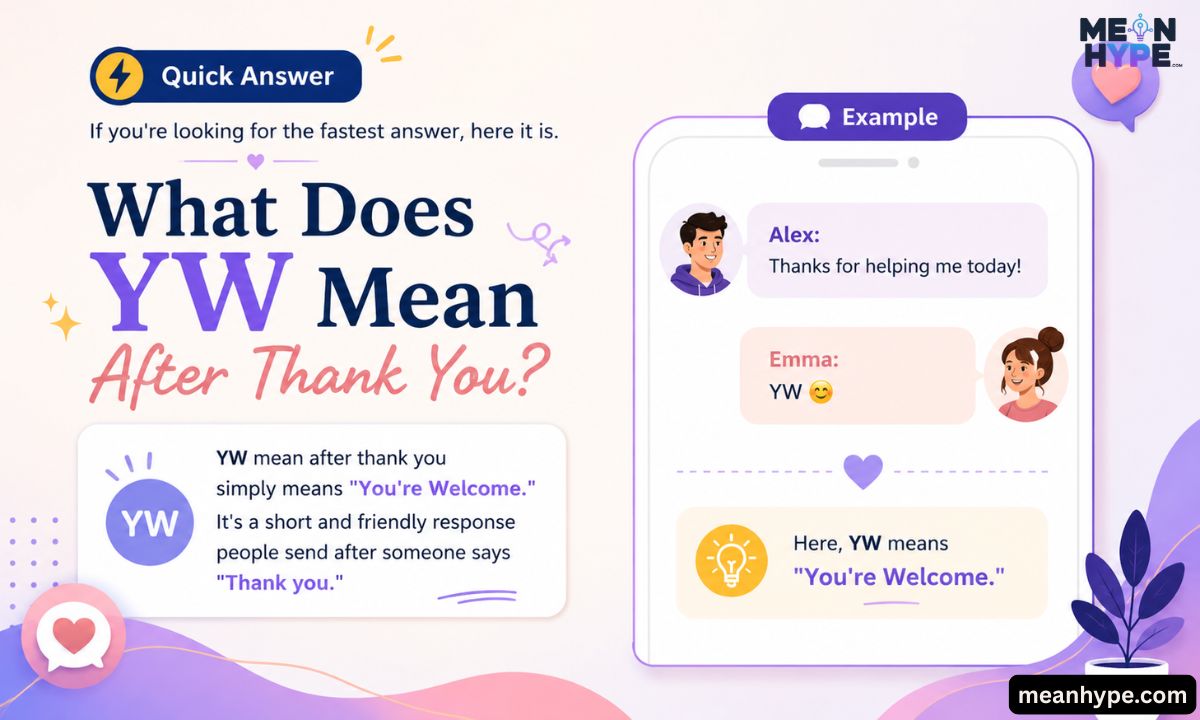
YW mean after thank you simply means “You’re Welcome.”
It’s a short and friendly response people send after someone says “Thank you.”
Example
Alex: Thanks for helping me today!
Emma: YW 😊
Here, YW means “You’re Welcome.”
Another example:
Chris: Thank you for sending the notes.
Ryan: YW! Glad I could help.
In both examples, YW mean after thank you expresses politeness and acknowledges the other person’s gratitude.
What Does YW Mean After Thank You?
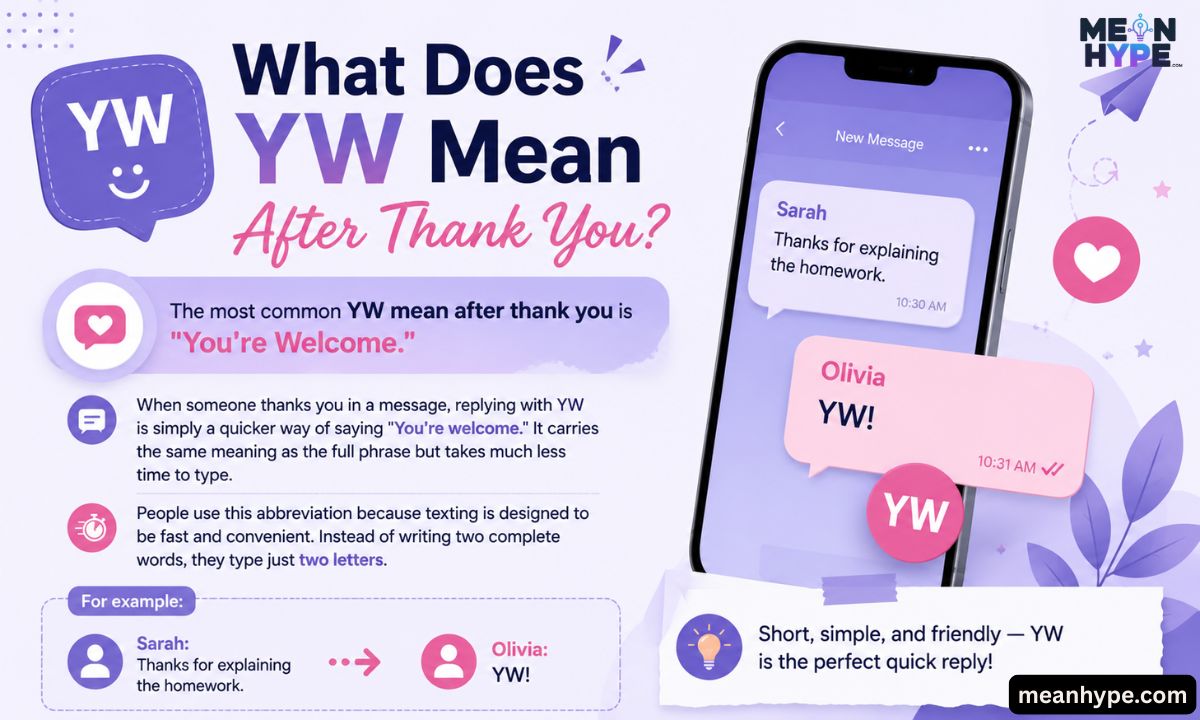
The most common YW mean after thank you is “You’re Welcome.”
When someone thanks you in a message, replying with YW is simply a quicker way of saying “You’re welcome.” It carries the same meaning as the full phrase but takes much less time to type.
People use this abbreviation because texting is designed to be fast and convenient. Instead of writing two complete words, they type just two letters.
For example:
Sarah: Thanks for explaining the homework.
Olivia: YW!
The meaning doesn’t change. The reply is still polite, friendly, and appreciative.
Learning YW mean after thank you helps you understand conversations on nearly every messaging platform.
Full Form of YW
The full form of YW is:
YW = You’re Welcome
This abbreviation has been used in online chats, SMS messages, and social media conversations for many years.
Although it’s short, the meaning is exactly the same as saying:
- You’re welcome.
- Happy to help.
- No problem.
- Anytime.
- My pleasure.
Among these, “You’re Welcome” remains the most common meaning.
Plain-English Explanation
In simple words, YW mean after thank you is a polite response that tells someone:
“I’m happy to help.”
or
“It was no problem.”
Think of it as the digital version of saying “You’re welcome” in real life.
For example:
Friend: Thanks for picking me up.
You: YW!
You’re simply responding politely without typing the full phrase.
This is why YW has become one of the most widely recognized internet abbreviations.
Why People Use YW
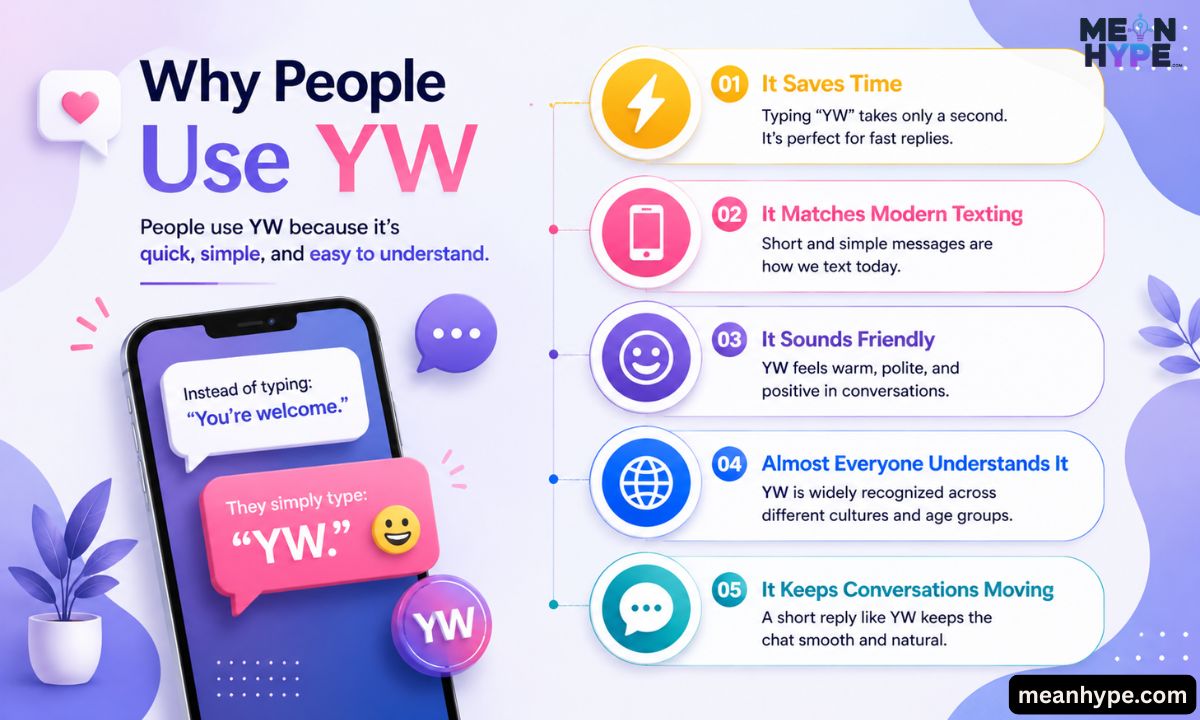
People use YW because it’s quick, simple, and easy to understand.
Instead of typing:
“You’re welcome.”
They simply type:
“YW.”
This small shortcut saves time while keeping the conversation friendly.
Here are some of the biggest reasons people use YW mean after thank you every day.
⚡ It Saves Time
Typing two letters is much faster than typing two complete words.
During fast conversations, every second matters.
📱 It Matches Modern Texting
Today’s messaging apps encourage short replies.
People naturally use abbreviations while chatting on:
- 👻 Snapchat
- 🎵 TikTok
- 💬 Facebook Messenger
- 🎮 Discord
😊 It Sounds Friendly
Although it’s short, YW still sounds polite in casual conversations.
Many people even add emojis like:
- 😊
- 👍
- 😄
- ❤️
to make the reply feel warmer.
🌍 Almost Everyone Understands It
Because YW has been around for years, most people immediately know what it means.
That makes communication quicker and easier.
💬 It Keeps Conversations Moving
Instead of slowing down a chat with longer replies, YW lets the conversation continue naturally.
That’s one reason YW mean after thank you remains popular across different age groups.
Short Example Sentence
Here are a few simple examples showing YW mean after thank you in everyday conversations.
Example 1
Emma: Thanks!
Olivia: YW 😊
Example 2
James: Thank you for your help.
Lucas: YW!
Example 3
Sophia: Thanks for the advice.
Grace: YW. Anytime!
Example 4
Daniel: Thank you for sending the photos.
Emily: YW ❤️
Example 5
Michael: Thanks for waiting.
Harper: YW!
These examples show how naturally YW fits into casual conversations.
Quick Summary
YW mean after thank you means “You’re Welcome.” It’s one of the most common ways to respond politely after someone thanks you in a text message.
Where Is YW Commonly Used?
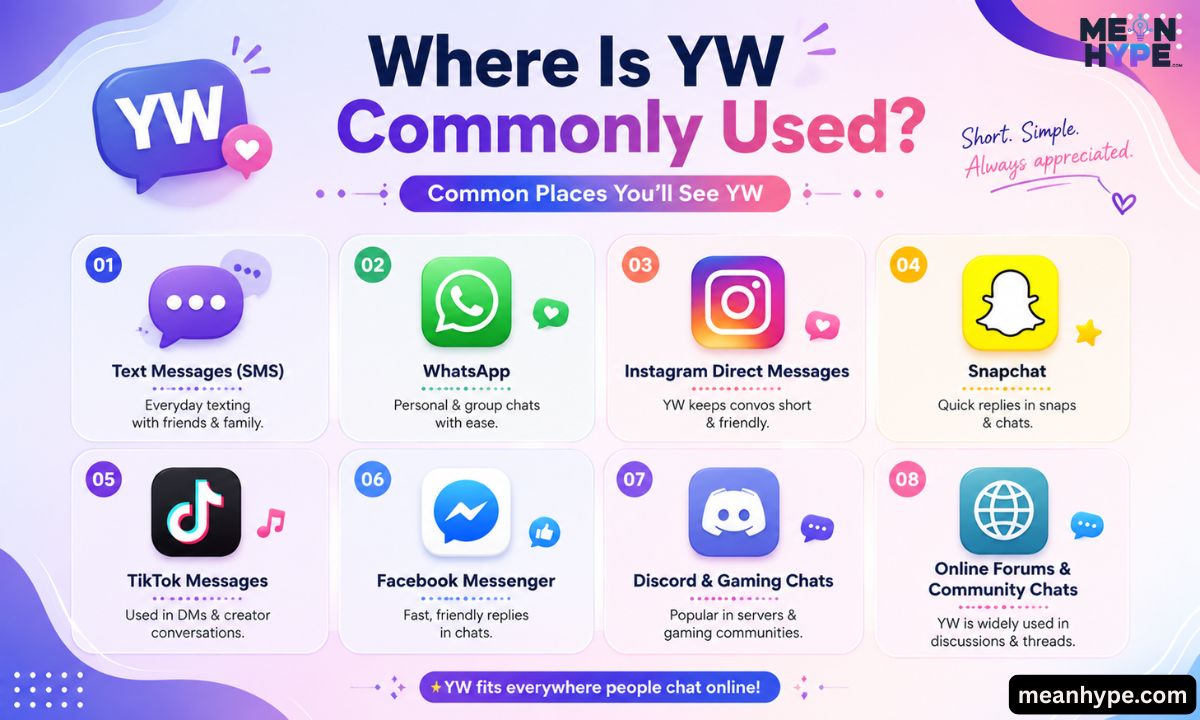
You’ll find YW mean after thank you on almost every platform where people communicate online.
Since it’s short and easy to type, it has become part of everyday digital conversations.
Common Places You’ll See YW
📱 Text Messages (SMS)
Friends often reply with YW after receiving a thank-you message.
Example:
“Thanks!”
“YW 😊”
One of the most common places to see YW.
People use it during quick chats with friends and family.
📸 Instagram Direct Messages
Instagram users frequently reply with YW after someone thanks them for sharing a post, reel, or story.
👻 Snapchat
Snapchat conversations move quickly, making abbreviations like YW very popular.
🎵 TikTok Messages
Creators and followers often exchange short replies, including YW.
💬 Facebook Messenger
Many casual conversations include YW because it’s simple and widely understood.
🎮 Discord & Gaming Chats
Gamers use YW during fast-paced discussions where quick responses matter.
🌐 Online Forums & Community Chats
You’ll also see YW on Reddit, online communities, and group discussions.
Tone of YW
Understanding the tone helps you use YW mean after thank you correctly.
| ✅ Appropriate | ❌ Not Appropriate |
| Casual texting | Business emails |
| WhatsApp chats | Academic writing |
| Instagram DMs | Legal documents |
| Snapchat messages | Research papers |
| Messenger chats | Professional reports |
| Gaming chats | Official communication |
Best Situations to Use YW
- 💬 Casual conversations
- 👥 Group chats
- 📱 Text messages
- 📸 Social media
- 🎮 Gaming chats
- 😊 Friendly replies
Situations to Avoid
Instead of writing:
❌ YW
In formal communication, write:
✅ You’re welcome.
or
✅ My pleasure.
Using the complete phrase sounds more professional and avoids misunderstandings.
Realistic Conversation Examples (Text Style)
The easiest way to understand YW mean after thank you is by seeing how people use it in real conversations. These examples show how naturally YW appears in everyday chats.
Example 1 😊
Emma: Thanks for helping me with my homework.
Olivia: YW! Glad I could help.
Example 2 📱
Alex: Thank you for the ride.
Ryan: YW 😊
Example 3 💬
Sarah: Thanks for sending the pictures.
Grace: YW! They turned out great.
Example 4 🎮
James: Thanks for carrying our team.
Lucas: YW 😂
Example 5 📸
Emily: Thanks for sharing that Reel.
Sophia: YW! I knew you’d like it.
Example 6 🎵
Michael: Thanks for recommending that song.
Daniel: YW! It’s one of my favorites.
Example 7 👻
Harper: Thanks for reminding me about the meeting.
Charlotte: YW. Happy to help!
Example 8 ❤️
Noah: Thank you so much.
Ella: YW ❤️
Example 9 😄
Jacob: Thanks for explaining everything.
Mia: YW! Anytime.
Example 10 👍
David: Thanks for the quick reply.
Ava: YW 👍
These examples show that YW mean after thank you is simply a short, polite response that keeps conversations friendly and natural.
The Simple Explanation Everyone’s Searching For
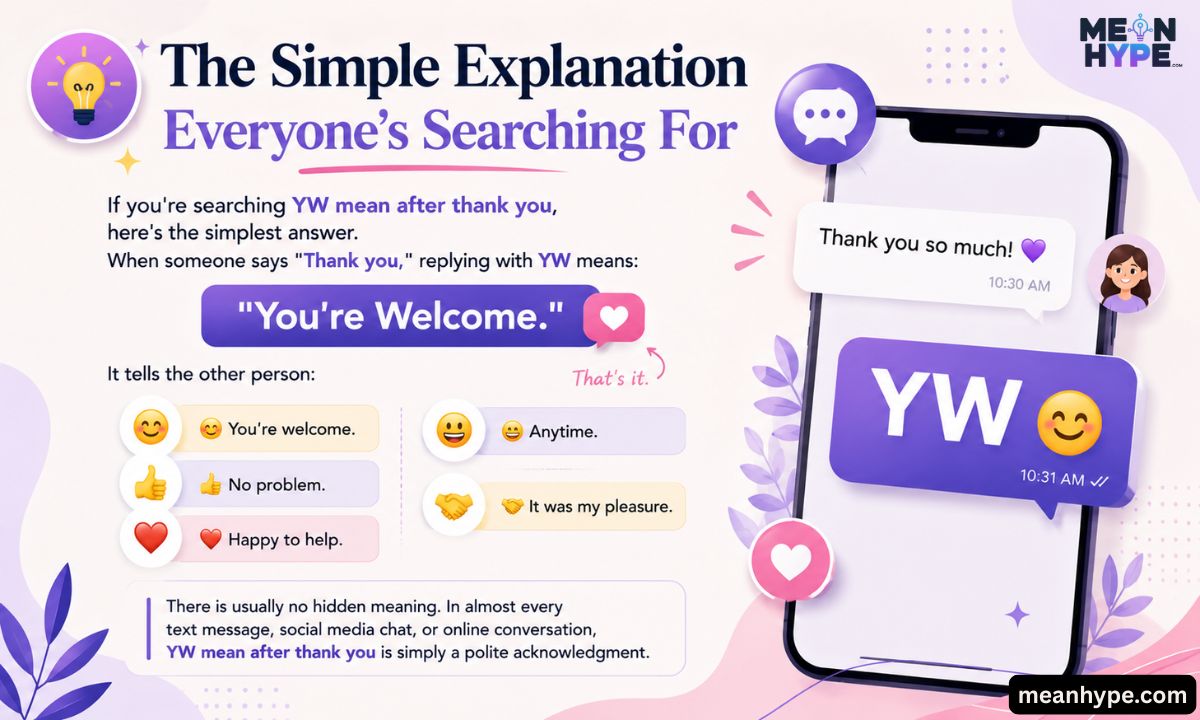
If you’re searching YW mean after thank you, here’s the simplest answer.
When someone says “Thank you,” replying with YW means:
“You’re Welcome.”
That’s it.
It tells the other person:
- 😊 You’re welcome.
- 👍 No problem.
- ❤️ Happy to help.
- 😄 Anytime.
- 🤝 It was my pleasure.
There is usually no hidden meaning. In almost every text message, social media chat, or online conversation, YW mean after thank you is simply a polite acknowledgment.
Whenever you see:
Friend: Thanks!
You: YW!
You’re responding in the same way as saying “You’re welcome.”
When to Use and When Not to Use YW
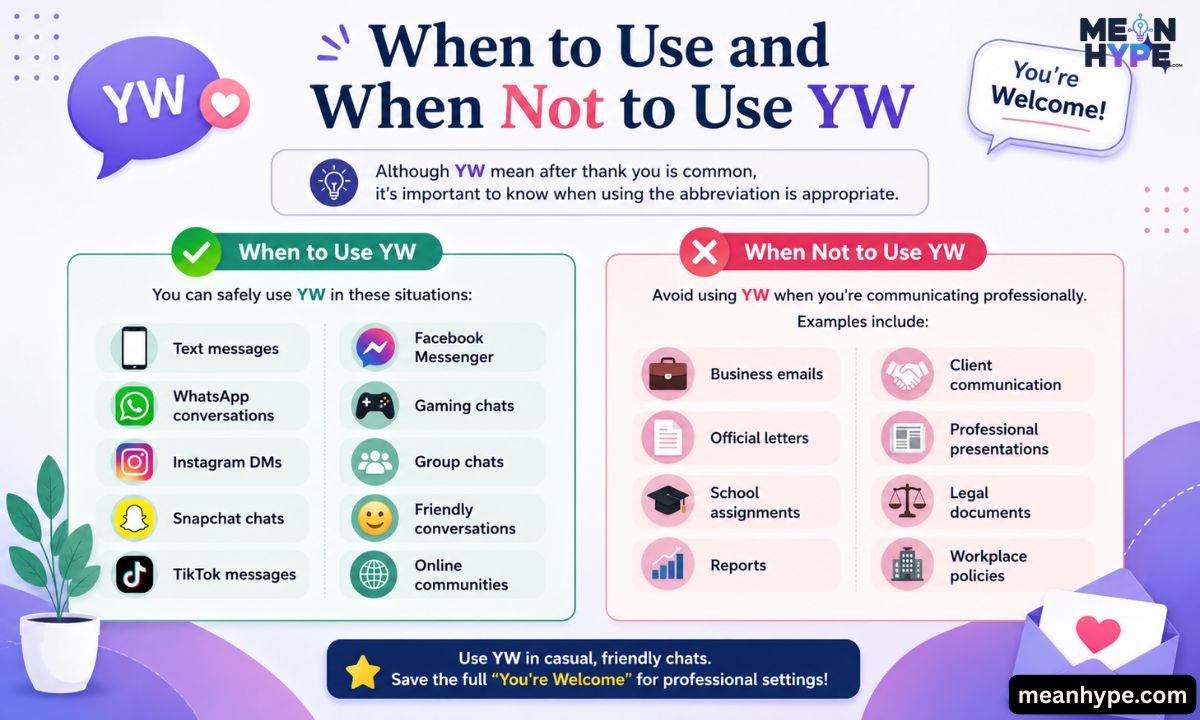
Although YW mean after thank you is common, it’s important to know when using the abbreviation is appropriate.
✅ When to Use YW
You can safely use YW in these situations:
- 📱 Text messages
- 💬 WhatsApp conversations
- 📸 Instagram DMs
- 👻 Snapchat chats
- 🎵 TikTok messages
- 💬 Facebook Messenger
- 🎮 Gaming chats
- 👥 Group chats
- 😊 Friendly conversations
- 🌐 Online communities
Examples
Friend: Thanks for waiting.
You: YW!
Classmate: Thanks for the notes.
You: YW 😊
Gaming Partner: Thanks for the backup.
You: YW!
These situations are casual, so YW feels natural.
❌ When Not to Use YW
Avoid using YW when you’re communicating professionally.
Examples include:
- 💼 Business emails
- 📄 Official letters
- 🎓 School assignments
- 📊 Reports
- 🤝 Client communication
- 📰 Professional presentations
- ⚖️ Legal documents
- 🏢 Workplace policies
Instead of writing:
❌ YW
Write:
- ✅ You’re welcome.
or
- ✅ My pleasure.
or
- ✅ Happy to help.
Using complete words sounds more respectful and professional.
Helpful Tip 💡
If you’re unsure whether YW is appropriate, ask yourself:
Would I normally use internet slang in this conversation?
If the answer is no, write the full phrase instead.
That’s the safest choice.
Comparison Table
Here’s a quick comparison showing where YW mean after thank you works best.
| Situation | Example Reply | Should You Use YW? | Reason |
| 📱 Text Message | “YW 😊” | ✅ Yes | Casual conversation |
| “YW!” | ✅ Yes | Very common | |
| 📸 Instagram DM | “YW ❤️” | ✅ Yes | Friendly reply |
| 👻 Snapchat | “YW 😂” | ✅ Yes | Informal chat |
| 🎮 Gaming Chat | “YW bro!” | ✅ Yes | Fast communication |
| 💼 Business Email | “YW” | ❌ No | Too informal |
| 📄 Official Letter | “YW” | ❌ No | Unprofessional |
| 🎓 School Assignment | “YW” | ❌ No | Use complete words |
| 🤝 Client Email | “YW” | ❌ No | Better to write “You’re welcome.” |
| 🏢 Workplace Chat (Formal) | “You’re welcome.” | ✅ Better | Clear and professional |
Quick Summary ⭐
Use YW when:
- You’re chatting casually.
- The conversation is friendly.
- Everyone understands texting abbreviations.
Avoid YW when:
- Writing professionally.
- Communicating with clients.
- Sending official emails.
- Completing academic work.
Using the right tone makes your communication clearer and leaves a better impression.
Similar Slang Words or Alternatives
If you understand YW mean after thank you, you may also notice other texting abbreviations that people use to reply politely. These alternatives appear in SMS, WhatsApp, Instagram, Snapchat, TikTok, Discord, and other messaging apps.
Here are some of the most common ones.
| Term | Meaning | Best Time to Use |
| YW | You’re Welcome | Casual texting |
| NP | No Problem | Friendly conversations |
| Anytime | Happy to help anytime | Friends and family |
| My Pleasure | Polite response | Professional settings |
| Happy to Help | Friendly and respectful | School or work |
| No Worries | Don’t worry about it | Casual chats |
| Sure! | Simple acknowledgment | Informal replies |
| Of Course | Happy to do it | Everyday conversations |
| You’re Welcome | Full phrase | Formal and informal communication |
Although all of these responses are polite, YW is the fastest option in casual texting.
Which Alternative Should You Choose?
Choose YW when:
- 📱 Sending text messages
- 💬 Chatting with friends
- 📸 Messaging on social media
- 🎮 Talking during games
Choose the full phrase “You’re welcome” when:
- 💼 Writing professional emails
- 🏢 Talking to clients
- 📄 Sending formal messages
- 🎓 Communicating with teachers or professors
Understanding these alternatives makes YW mean after thank you even easier to use in the right situation.
FAQs:
1. What does YW mean after thank you?
The most common YW mean after thank you is “You’re Welcome.” It’s a short, polite response that people use after someone says “Thank you” in a text message or online chat.
2. Is saying YW rude?
No. YW is generally considered polite and friendly. However, because it’s an abbreviation, it can feel too casual in professional conversations.
If you’re sending a business email, it’s better to write “You’re welcome” instead of YW.
3. Is YW commonly used in texting?
Yes.
YW is one of the most popular texting abbreviations used in:
- 📱 SMS
- 👻 Snapchat
- 🎵 TikTok
- 💬 Messenger
- 🎮 Discord
Millions of people use it every day because it’s quick and easy to type.
4. Can YW be used at work?
It depends. If you’re chatting with close coworkers in an informal setting, YW may be acceptable. However, for professional emails or client communication, writing “You’re welcome” sounds more respectful and professional.
5. Do younger people use YW more?
Yes. Teenagers and young adults use YW more often because they’re familiar with internet slang and texting shortcuts.
That said, people of all ages understand YW, especially if they use messaging apps regularly.
6. Is YW the same as “no problem”?
Not exactly, but they’re very similar. Both expressions politely respond to someone saying “Thank you.”
The difference is:
- YW means “You’re Welcome.”
- No problem emphasizes that helping wasn’t difficult.
In casual conversations, both responses are perfectly acceptable.
7. Can YW have other meanings?
Sometimes. Outside of texting, YW can occasionally stand for different things depending on the topic.
However, when you’re searching YW mean after thank you, the meaning is almost always “You’re Welcome.”
That’s the definition you’ll encounter in nearly every text conversation and social media chat.
Final Thought
Now you know exactly what YW mean after thank you means and why it’s one of the most common abbreviations in digital communication.
In almost every text message, WhatsApp chat, Instagram DM, Snapchat conversation, or online message, YW simply means “You’re Welcome.” It’s a fast, friendly, and polite way to acknowledge someone’s gratitude without typing the full phrase.
The next time someone thanks you, you can confidently reply with YW in casual conversations. If you’re writing a professional email or speaking in a formal setting, using the complete phrase “You’re welcome” is still the better choice.
As texting slang, internet abbreviations, and online communication continue to evolve, understanding simple expressions like YW makes conversations easier and more natural. Whether you’re chatting with friends, family, classmates, or coworkers, knowing YW mean after thank you helps you communicate with confidence and avoid confusion.

Ston is the founder and author of MeanHype, a website dedicated to explaining meanings, definitions, slang terms, phrases, abbreviations, and modern internet language in a simple and easy-to-understand way. With a passion for language and digital culture, Ston creates helpful content that makes complex or trending terms clear for readers around the world.