
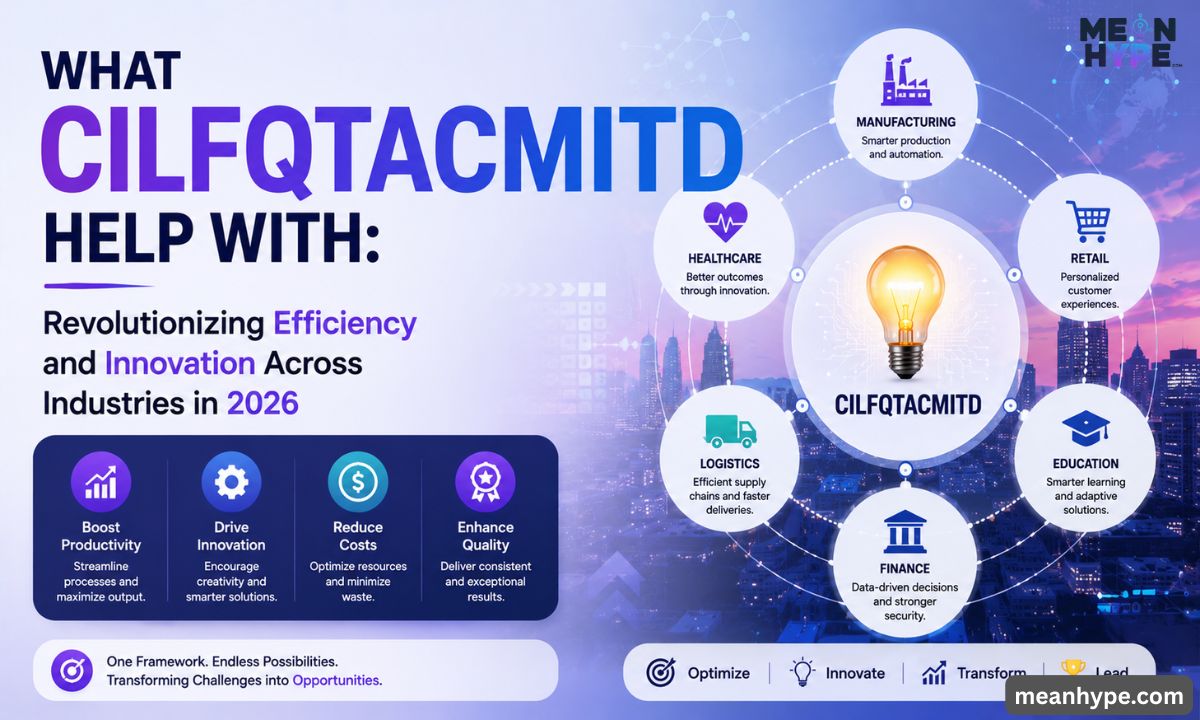
Modern digital transformation is reshaping how organizations operate, and many people are now trying to understand what CILFQTACMITD help with in real-world environments. This framework is becoming increasingly relevant because it supports automation, improves decision-making, and enhances operational efficiency across multiple industries.
In simple terms, CILFQTACMITD is the improvement of workflows, data processing, and intelligent system integration that allows businesses and institutions to perform faster and smarter.
As industries continue shifting toward AI-powered automation and cloud-based systems, understanding what CILFQTACMITD helps with becomes essential for staying competitive.
You can also read: What Does Opps Mean in Slang in 2026? Texting, TikTok & Social Media Complete Guide
Understanding CILFQTACMITD 🧠
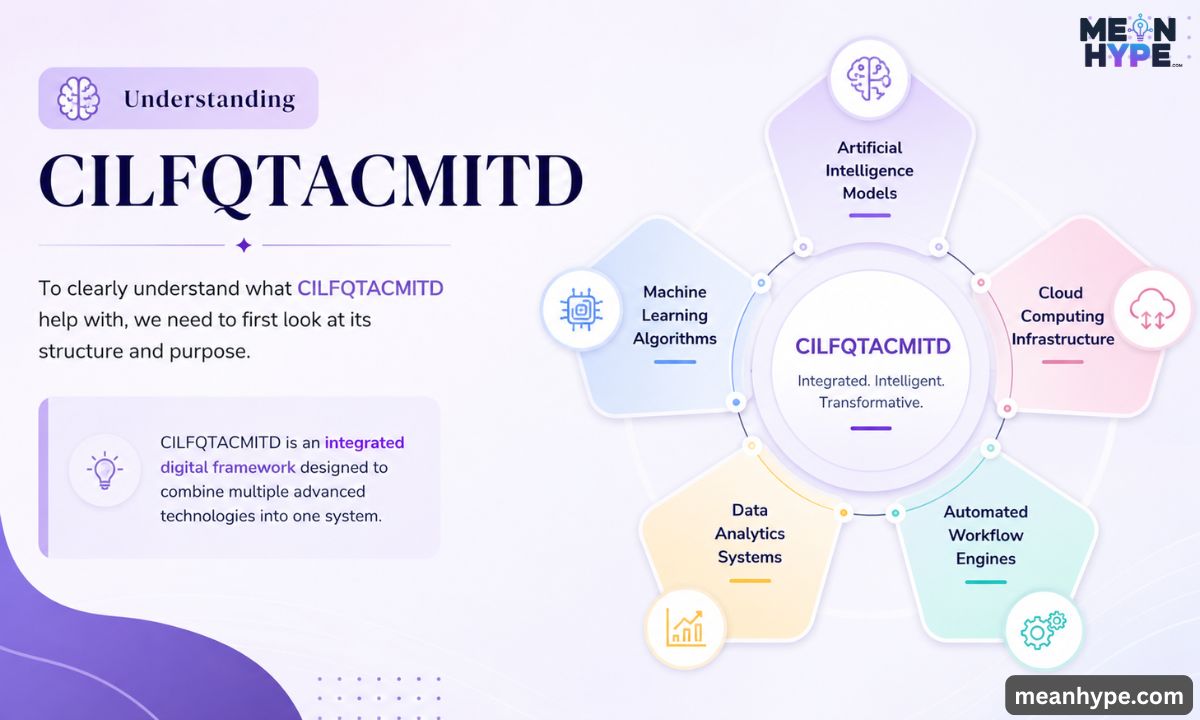
To clearly understand what CILFQTACMITD help with, we need to first look at its structure and purpose.
CILFQTACMITD is an integrated digital framework designed to combine multiple advanced technologies into one system. It includes:
- Artificial intelligence models
- Machine learning algorithms
- Cloud computing infrastructure
- Automated workflow engines
- Data analytics systems
Instead of functioning as a single tool, it works as a connected ecosystem that improves how information flows between systems.
This is why CILFQTACMITD is often linked with digital optimization, business intelligence systems, and enterprise automation solutions.
It allows organizations to reduce manual tasks, improve accuracy, and make faster decisions based on real-time data insights.
Key Areas Where CILFQTACMITD Helps ⚙️
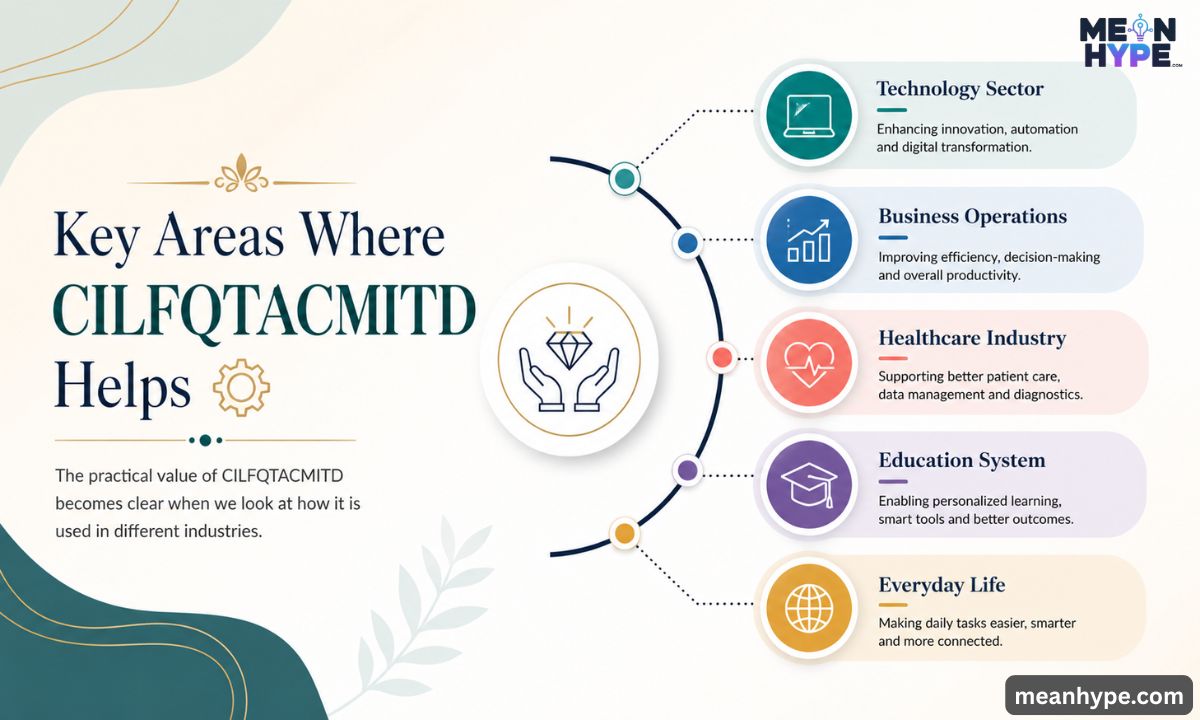
The practical value of CILFQTACMITD becomes clear when we look at how it is used in different industries.
Technology Sector 💻
In the technology field, CILFQTACMITD is improving system efficiency and reducing manual workload for developers and IT teams.
It supports:
- Automated debugging processes
- Real-time system monitoring
- Data pipeline optimization
- AI integration in applications
By using machine learning optimization tools and intelligent automation, development teams can focus more on innovation instead of repetitive maintenance tasks.
Business Operations 📊
In business environments, what CILFQTACMITD help with is mainly improving productivity and reducing operational costs.
Companies apply it for:
- Workflow automation systems
- Resource management optimization
- Customer data analysis
- Performance tracking and reporting
A major advantage is that it removes inefficiencies from daily operations. For example, manual tracking systems are replaced with automated dashboards that provide real-time insights.
This makes what CILFQTACMITD help with extremely valuable for enterprise digital transformation and operational efficiency improvement.
Healthcare Industry 🏥
In healthcare, what CILFQTACMITD help with is improving patient management and supporting faster medical decision-making.
Hospitals and clinics use it for:
- Electronic health record management
- Automated appointment scheduling
- Diagnostic data analysis
- Reducing administrative workload
Doctors and medical staff can access accurate patient information instantly, which improves treatment speed and accuracy.
This shows how what CILFQTACMITD help with directly enhances healthcare quality through healthcare automation systems and smart medical data processing.
Education System 🎓
In education, what CILFQTACMITD help with is transforming traditional learning into adaptive and personalized education systems.
Schools and universities use it for:
- Student performance tracking
- Adaptive learning systems
- Automated grading solutions
- Learning behavior analysis
Teachers can identify weak students early and adjust teaching methods accordingly.
This improves learning efficiency and makes education more student-focused through digital learning optimization tools.
Everyday Life 🌐
Even in daily life, what CILFQTACMITD help with can be seen in smart technologies and automated digital systems.
Examples include:
- Smart assistants and voice tools
- Recommendation algorithms in apps
- Smart home automation systems
- Predictive mobile applications
These systems quietly analyze user behavior and improve convenience without manual input.
So in daily life, what CILFQTACMITD help with is making everyday digital interactions smoother, faster, and more personalized.
Benefits of CILFQTACMITD 🚀
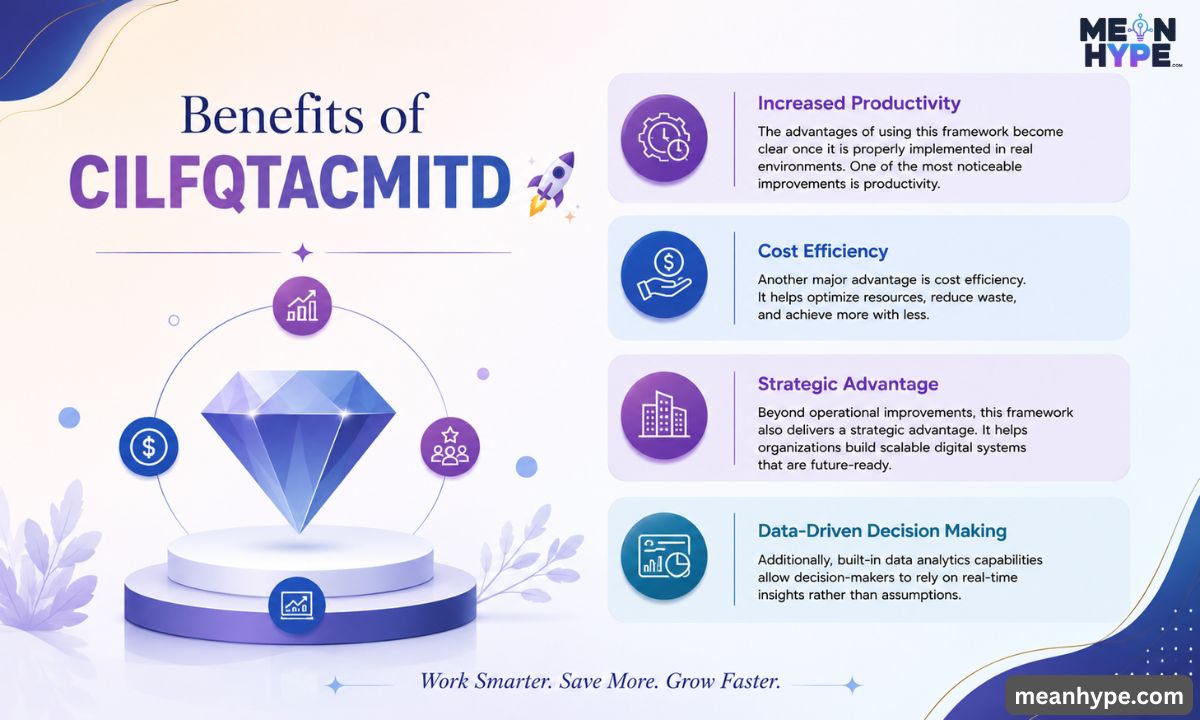
The advantages of using this framework become clear once it is properly implemented in real environments. One of the most noticeable improvements is productivity. Tasks that once required long manual effort can now be completed in a much shorter time through intelligent automation systems and streamlined workflows.
Another major advantage is cost efficiency. Many organizations report significant savings in operational expenses after adopting this framework. By reducing repetitive manual work and improving system accuracy, businesses are able to achieve more output with fewer resources.
Beyond operational improvements, this framework also delivers a strategic advantage. It helps organizations build scalable digital systems that can grow as requirements increase. Instead of redesigning entire systems, companies can simply expand existing structures.
Additionally, built-in data analytics capabilities allow decision-makers to rely on real-time insights rather than assumptions. This leads to more accurate planning, better forecasting, and stronger business performance.
Challenges and Limitations ⚠️
Although the benefits are strong, adopting this system is not without challenges. One of the most common issues is resistance to change. Employees and organizations often find it difficult to shift from traditional processes to automated digital systems.
Another challenge is integration complexity. Older systems may not easily connect with modern frameworks, which can slow down implementation. This is especially common in organizations that rely heavily on legacy infrastructure.
Training is also an important factor. Staff members need time to understand how the new system works. Without proper training, the transition can feel overwhelming and less effective.
Data quality is another critical issue. If the input data is inaccurate or incomplete, even advanced systems will produce unreliable outputs. That is why organizations must first ensure clean and structured data before implementation.
How to Implement CILFQTACMITD Successfully 🛠️
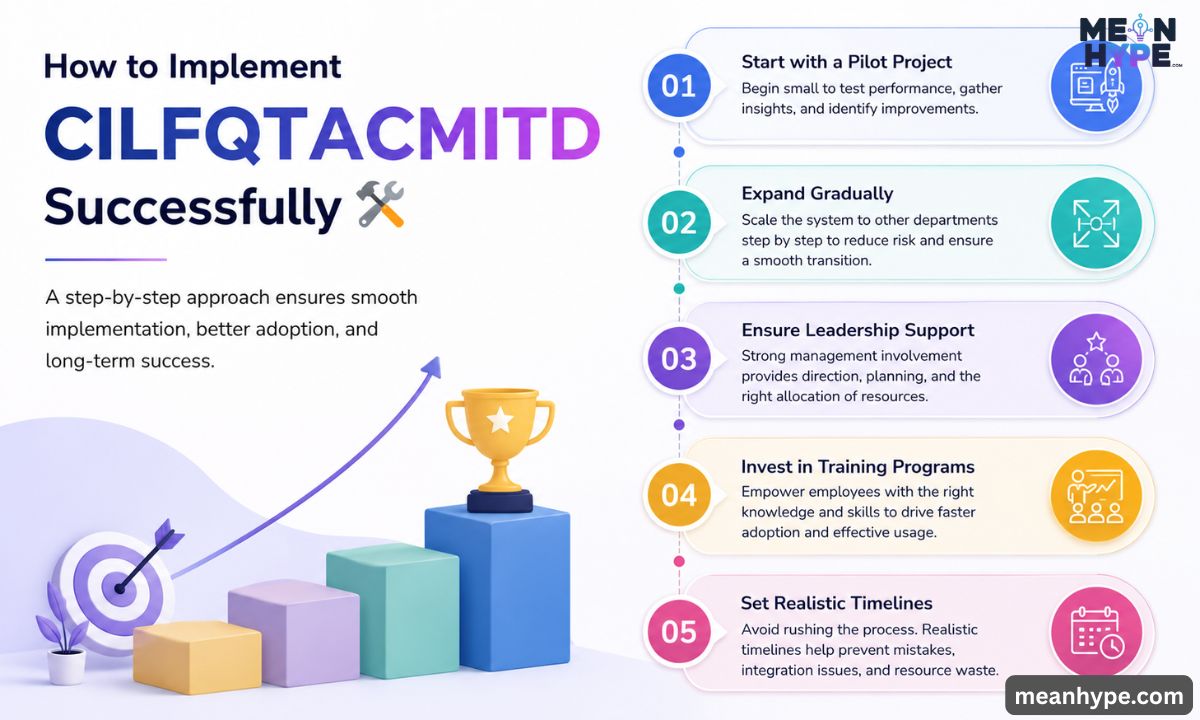
Successful implementation requires a step-by-step approach. Instead of applying the system everywhere at once, it is better to start with a small pilot project. This allows organizations to test performance and identify improvements before scaling up.
Once the initial phase is successful, the system can gradually be expanded to other departments. This reduces risk and makes the transition smoother.
Leadership support is also very important. Without strong management involvement, implementation efforts may slow down or fail. Leaders must ensure clear direction, proper planning, and resource allocation.
Training programs should also be introduced to help employees understand the system. When users are comfortable with the tools, adoption becomes faster and more effective.
Finally, organizations should set realistic timelines. Rushing the process can lead to mistakes, poor integration, and wasted resources.
Future of CILFQTACMITD 🔮
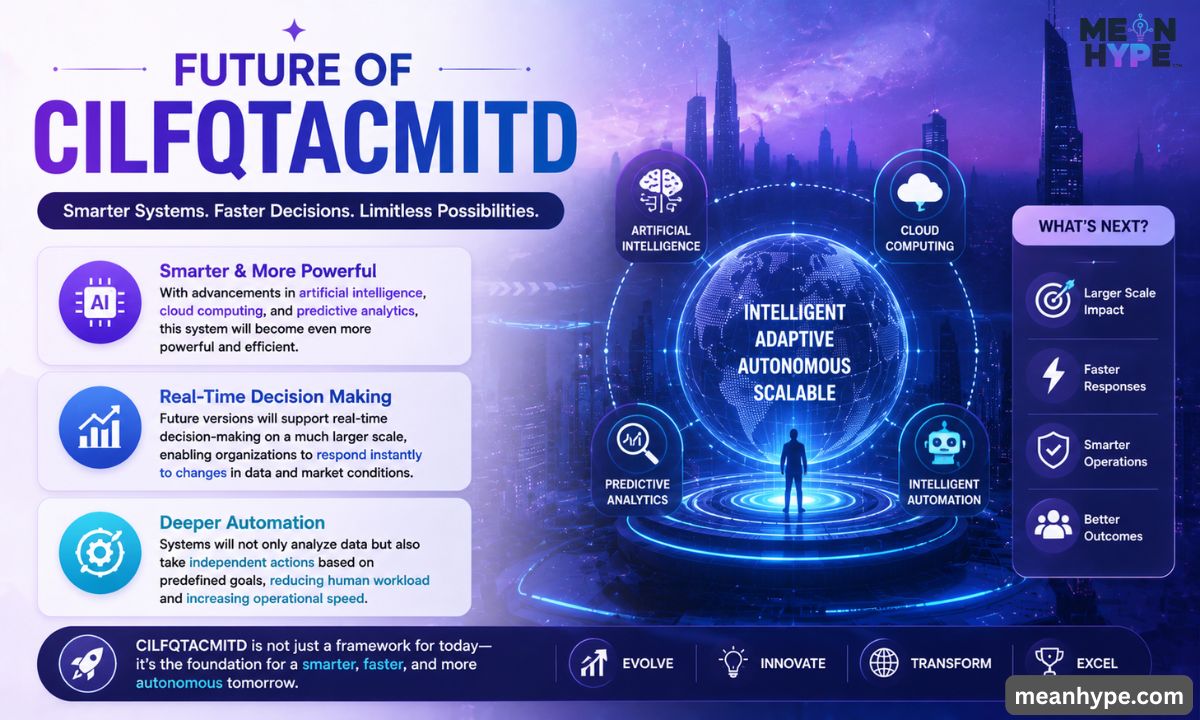
The future of this framework looks highly promising as technology continues to evolve. With advancements in artificial intelligence, cloud computing, and predictive analytics, this system is expected to become even more powerful and efficient.
Future versions may support real-time decision-making on a much larger scale, allowing organizations to respond instantly to changes in data and market conditions.
We may also see deeper automation where systems not only analyze data but also take independent actions based on predefined goals. This will reduce human workload even further and increase operational speed.
As more industries adopt digital transformation strategies, this framework will likely become a core part of enterprise systems worldwide. Early adopters will have a strong advantage in efficiency, scalability, and innovation.
FAQ’s ❓
What industries benefit most from this framework?
Technology, healthcare, education, and business sectors benefit the most due to high data usage and automation needs.
Can small businesses use it effectively?
Yes, it is scalable and can be implemented gradually depending on business size and needs.
How long does implementation take?
It depends on system complexity. Small pilots may take weeks, while full deployment can take months.
What is the biggest challenge in adoption?
The main challenges include integration with older systems, training requirements, and data quality issues.
Can it work with existing tools?
Yes, it is designed to integrate with existing systems rather than replace them completely.
Conclusion 🧾
In conclusion, this framework represents a modern approach to solving complex operational challenges across industries, and understanding what CILFQTACMITD help with makes it clear why it is gaining so much attention in digital transformation.
It combines automation, data intelligence, and system integration into a single unified structure, which is exactly what CILFQTACMITD help with in real-world applications.
From improving efficiency and reducing costs to enabling smarter decision-making, the real value of what CILFQTACMITD help with is both practical and strategic for organizations of all sizes.
Although challenges exist during adoption, the long-term benefits of CILFQTACMITD outweigh the initial difficulties and implementation efforts.
Organizations that invest in such systems today are positioning themselves for a more advanced and competitive digital future, which is the ultimate goal of what CILFQTACMITD help with in modern industries.

Ston is the founder and author of MeanHype, a website dedicated to explaining meanings, definitions, slang terms, phrases, abbreviations, and modern internet language in a simple and easy-to-understand way. With a passion for language and digital culture, Ston creates helpful content that makes complex or trending terms clear for readers around the world.